RBI Repo Rate Hike 2026: What It Means for Your Home Loan, Car Loan and EMIs
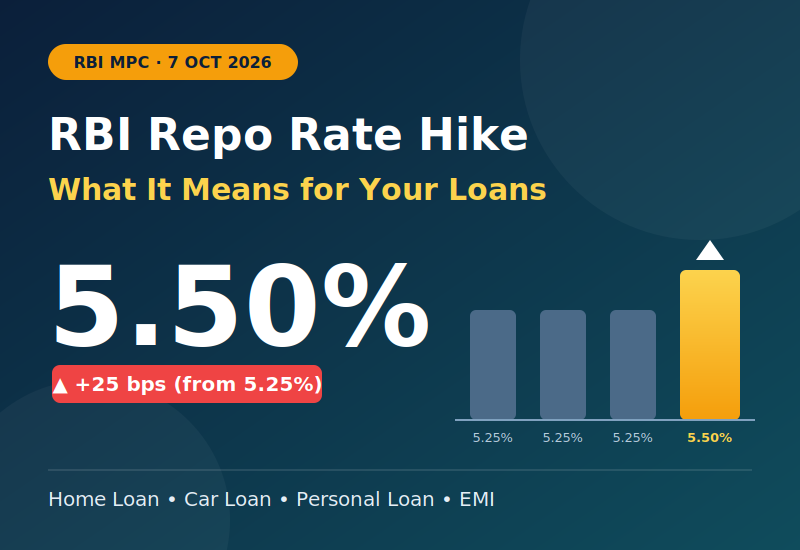
On 7 October 2026, the RBI’s Monetary Policy Committee voted unanimously to raise the repo rate by 25 basis points, from 5.25% to 5.50%. This is the first repo rate increase since February 2023. If you have a home loan, car loan or personal loan, here is what changes for you.
What Is the Repo Rate, and Why Does It Matter?
The repo rate is the rate at which the RBI lends short-term money to banks. When it goes up, borrowing becomes more expensive for banks, and that can pass through to higher lending rates for households and businesses. When it falls, loans usually get cheaper. That is why every RBI policy announcement matters to anyone paying an EMI.
RBI Repo Rate Today: October 2026 Policy at a Glance
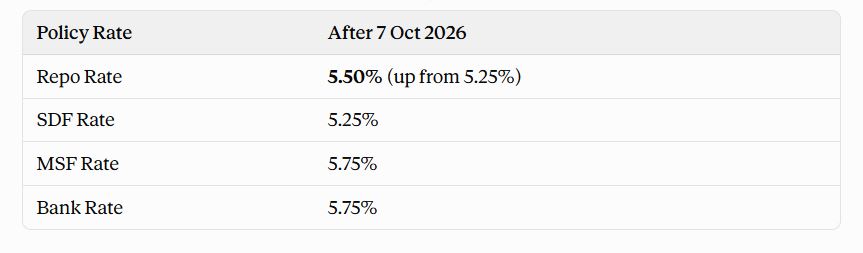
Other key points from the policy:
- Stance change: The MPC moved from “neutral” to “calibrated tightening”, backed by a 4-2 majority.
- Inflation forecast: The FY27 CPI projection is 5.2%. CPI inflation rose to 4.8% in August 2026 from 4.5% in July.
- Growth forecast: The FY27 GDP growth projection was raised from 6.7% to 7.1%.
- Next meeting: The next MPC meeting is 2 to 4 December 2026.
How the Repo Rate Hike Affects Your Loans
1. Home Loan EMI
Most home loans taken since October 2019 are linked to an external benchmark such as the repo rate (EBLR). That means your rate can rise soon after a hike, once your lender’s reset date arrives. Loans linked to an older benchmark such as MCLR or the base rate reset more slowly, often every 6 to 12 months.
Example: On a ₹50 lakh loan over 20 years, a 25 bps rise from 8.50% to 8.75% lifts the EMI from about ₹43,400 to about ₹44,200. That is roughly ₹800 more per month. Alternatively, your lender may keep the EMI the same and extend your tenure.
2. Car Loan and Personal Loan
Car loans and personal loans are usually fixed-rate, so existing loans are not affected. New borrowers may see higher quotes as lenders reprice. If you are about to take a loan, compare offers across banks and NBFCs.
3. Loans Against Property and MSME Loans
Many of these loans are linked to the repo rate, so rates can rise with the next reset. Business borrowers should plan for a slightly higher interest cost.
4. Fixed Deposits and Savings
Higher policy rates can lead banks to raise FD rates over time. Savers may get slightly better returns, but deposit rates usually move more slowly than loan rates.
What Should Salaried Borrowers Do Now?
- Check your loan type. Find out whether it is repo-linked (EBLR), MCLR-linked or fixed, and when your next reset date is.
- Make part-prepayments. Even small yearly prepayments cut the principal and the total interest paid over the loan’s life.
- Prefer a shorter tenure to a higher EMI. If your lender offers the choice, a higher EMI saves more interest in the long run. If cash flow is tight, a longer tenure is acceptable, as long as you plan to prepay later.
- Negotiate your spread. If your credit score is strong, ask your lender to reduce the spread over the benchmark. Compare it with what new customers are offered.
- Avoid new unsecured debt. Credit card balances and personal loans carry high rates that do not need a repo rate move to hurt.
- Keep an emergency fund. Aim for 6 months of expenses so a rate rise never forces you to miss an EMI.
What Next? Will There Be More Hikes?
The word “calibrated” signals that the RBI is not committing to a fixed series of hikes. Future moves will depend on inflation and growth data, so watch the MPC minutes due on 21 October and the 2 to 4 December meeting.
Frequently Asked Questions
What is the repo rate today?
The RBI repo rate is 5.50% after the 7 October 2026 policy.
Will my home loan EMI increase after the repo rate hike?
If your loan is repo-linked, your rate or tenure will adjust at your next reset date. Fixed-rate loans do not change automatically.
Why did the RBI raise the repo rate?
The MPC is balancing a rising inflation outlook with a stronger growth forecast, which is why it moved to a stance of calibrated tightening.
Is it a good time to take a home loan?
Rates are rising but still moderate by historical standards. Compare lender offers, check your credit score, and borrow only what your budget can handle if rates rise again.
Should I switch my home loan to another bank?
Consider it only if the rate gap is meaningful (usually 0.5% or more) after counting processing fees and other switching costs.
Do fixed deposit rates go up when the repo rate rises?
They often do, but with a lag. Banks adjust deposit rates gradually.