5 Powerful Habits That Can Help You Build Wealth
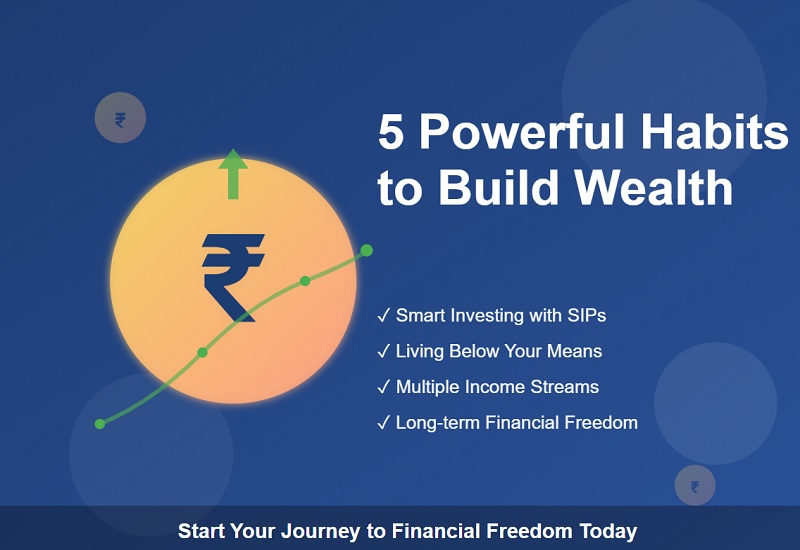
We all dream of financial freedom, but the path to wealth isn’t about winning a lottery or striking it rich overnight. Real wealth is built through consistent habits practised over time. Here are 5 Powerful Habits That Can Help You Build Wealth on the path to financial prosperity.
1. Live Below Your Means
This might sound simple, but it’s the foundation of wealth building in India’s consumption-driven economy. Living below your means doesn’t require extreme frugality or deprivation. It simply means spending less than you earn and being intentional about your purchases.
The wealthy understand that income isn’t the same as wealth. You can earn ₹15-20 lakhs annually and still struggle financially if you spend it all on EMIs, lifestyle upgrades, and keeping up with social expectations. Start by tracking your expenses for a month , identifying areas where you’re overspending, and redirecting that money toward savings and investments and try to follow 50/30/20 Budget Rule.
In India, where family obligations and social pressures can lead to overspending on weddings, festivals, and status symbols, it’s crucial to set boundaries. Even saving 20-30% of your income can compound into substantial wealth over time, especially when invested wisely.
2. Invest Consistently and Early
Time is your greatest ally when it comes to building wealth. Thanks to compound interest, money invested today grows exponentially over the years. The difference between starting to invest at 25 versus 35 can literally be lakhs of rupees by retirement.
You don’t need to be a financial expert to start investing. Begin with:
- PPF (Public Provident Fund) for tax-free, safe long-term savings
- ELSS mutual funds for tax benefits under Section 80C
- Nifty 50 or Sensex index funds for equity exposure
- EPF maximization through your employer
- NPS (National Pension System) for retirement planning
The key is consistency. Set up SIPs (Systematic Investment Plans) so you’re investing automatically every month. Start small if needed—even ₹1,000 per month is better than nothing. Pay yourself first, and make investing a non-negotiable part of your financial routine.
3. Continuously Learn and Develop Valuable Skills
The most reliable investment you can make is in yourself. Wealthy Indians are voracious learners who constantly upgrade their skills and knowledge. This doesn’t necessarily mean pursuing another degree from IIT or IIM. It means staying curious, reading books, taking online courses on platforms like Coursera or Udemy, attending workshops, and seeking mentorship.
Focus on developing skills that increase your earning potential in the Indian job market:
- Digital marketing and data analytics
- Coding and software development
- Financial literacy and investment knowledge
- English communication and leadership skills
- Emerging technologies like AI and cloud computing
In today’s India, where job markets are rapidly evolving and startups are booming, your ability to adapt and learn is more important than any single degree. Invest in certifications, attend industry conferences, and network actively on LinkedIn.
4. Build Multiple Income Streams
Relying solely on your salary is risky in India’s volatile job market. Wealthy people understand the importance of diversification, not just in their investments but in their income sources. This might include:
- Freelance consulting or services (on platforms like Upwork or Fiverr)
- Starting a side business or online store
- Rental income from property
- Dividend income from stocks
- Teaching or coaching online
- Creating digital content (YouTube, blogging)
- Investing in mutual funds and stocks for capital gains
Start by identifying your skills and interests, then explore how you can monetize them outside your primary job. The goal isn’t to work 80 hours a week but to create income streams that eventually require less active effort. Your first additional income stream might only generate ₹5,000-10,000 per month, but it’s a start. As you develop more streams, your financial stability increases dramatically, especially during economic downturns or job transitions.
5. Delay Gratification and Think Long-Term
Perhaps the most crucial habit distinguishing the wealthy from everyone else is their ability to delay gratification. In India’s aspirational economy, where peer pressure and social media constantly push consumption, this is particularly challenging but essential.
This means:
- Buying a reliable used car instead of a new one on EMI
- Cooking at home instead of ordering from Swiggy/Zomato daily
- Investing in mutual funds instead of upgrading to the latest iPhone
- Renting before buying property until you’re truly ready
- Avoiding credit card debt and personal loans for lifestyle purchases
Develop a long-term mindset by setting clear financial goals for 5, 10, and 20 years. Want to retire by 50? Buy a house? Fund your children’s education abroad? When faced with spending decisions, ask yourself whether this purchase moves you closer to or further from your goals. Train yourself to find satisfaction in progress toward financial objectives rather than in immediate consumption or impressing others.
The Bottom Line
Building wealth in India isn’t about making one brilliant stock pick or starting the next unicorn startup. It’s about adopting sustainable habits and practicing them consistently over time, while navigating India’s unique financial landscape with its tax benefits, investment options, and economic challenges.
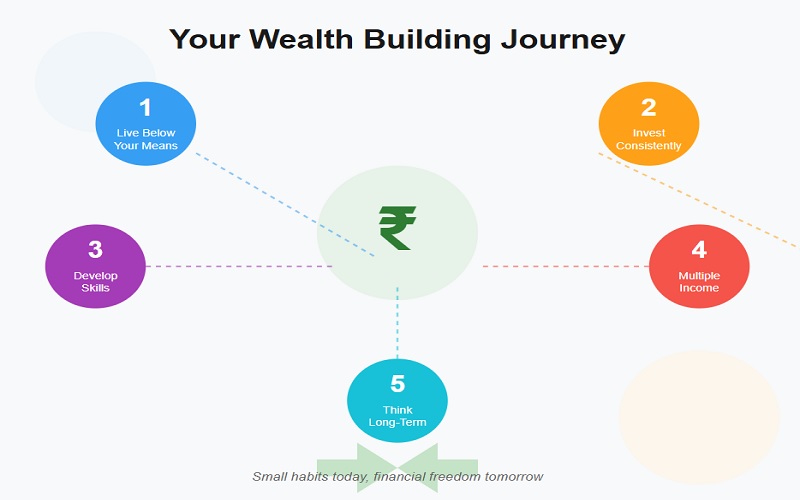
These five habits—living below your means despite social pressures, investing consistently through SIPs and tax-advantaged accounts, continuous learning, building multiple income streams, and delaying gratification—work together to create a powerful wealth-building system suited for Indian circumstances.
The best time to start was yesterday. The second best time is today. Choose one habit to focus on this month, master it, then add another. Small changes compound into life-changing results, and before you know it, you’ll be well on your way to the financial freedom you’ve been dreaming about—whether that means early retirement, financial security for your family, or the ability to pursue your passions without money worries.