Large Cap Funds: Way to Investing in Blue-Chip Mutual Funds

Investing can feel overwhelming, especially when you’re trying to figure out where to put your hard-earned money. If you’re looking for stability combined with growth potential, large cap mutual funds might just be the answer you’ve been searching for. Let me walk you through everything you need to know about these investment powerhouses.
What Are Large Cap Funds?
Large cap funds are mutual funds that primarily invest in large-capitalization companies—the giants of the business world. According to SEBI regulations in India, these are companies ranked from 1st to 100th in terms of market capitalization. Think of household names like Reliance Industries, TCS, HDFC Bank, or Infosys. These are the companies that have proven themselves over decades.
The term “large cap” refers to companies with a market capitalization typically exceeding ₹20,000 crores in India (or $10 billion globally). These aren’t just big companies—they’re industry leaders that have weathered economic storms and emerged stronger.
Why Do Investors Love Large Cap Funds?
Stability in Uncertain Times
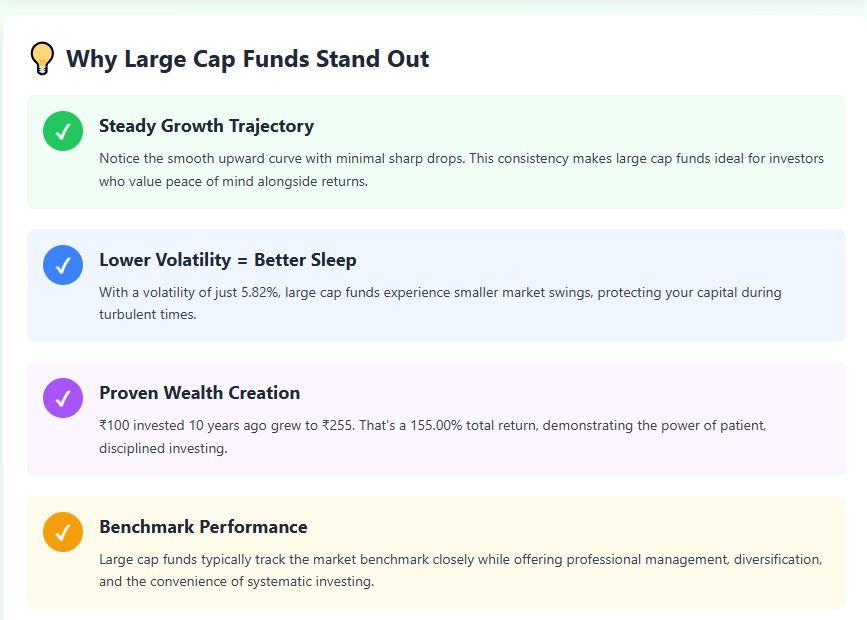
When markets get volatile and headlines scream about economic uncertainty, large cap companies tend to be the steady ships in stormy seas. They have established business models, diversified revenue streams, and the resources to navigate challenging times. For investors who value peace of mind, this stability is invaluable.
Lower Risk Profile
While no investment is entirely risk-free, large cap funds are generally considered less risky than mid cap or small cap funds. These companies have proven track records, strong management teams, and the financial muscle to handle economic downturns better than their smaller counterparts.
Consistent Returns
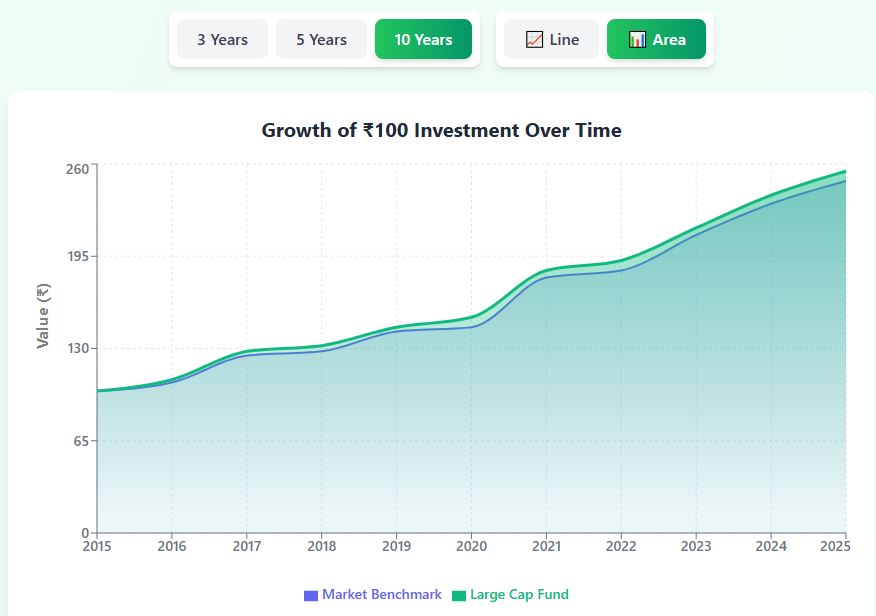
You won’t always get the explosive growth you might see with small cap stocks, but what you get instead is consistency. Large cap funds typically deliver steady, predictable returns over the long term. They’re like the reliable friend who always shows up—maybe not the most exciting, but dependable when it counts.
High Liquidity
Large cap stocks are actively traded on stock exchanges, which means your mutual fund manager can buy or sell them easily. This liquidity matters when you need to redeem your investment or when the fund needs to rebalance its portfolio.
Who Should Invest in Large Cap Funds?
Conservative Investors
If you’re someone who checks your portfolio daily and loses sleep over market volatility, large cap funds can help you rest easier. They’re designed for investors who prioritize capital preservation alongside growth.
First-Time Investors
Starting your investment journey? Large cap funds make an excellent first step. They offer a gentler introduction to equity investing without the wild swings that can scare newcomers away from the market forever.
Retirees or Near-Retirees
When you’re approaching retirement or already there, you can’t afford to take excessive risks with your nest egg. Large cap funds provide equity exposure with relatively lower volatility, making them suitable for capital that needs to work hard but safely.
Goal-Based Investors
Planning for a child’s education in 7-10 years or building a retirement corpus? Large cap funds offer a balanced approach that can help you reach medium to long-term financial goals without taking undue risks.
How to Choose the Right Large Cap Fund
Look Beyond Recent Returns
We’ve all seen the disclaimers: “Past performance is not indicative of future results.” Yet many investors still chase last year’s top performer. Instead, examine a fund’s performance over 5, 7, and 10-year periods. Consistency matters more than occasional spectacular years.
Check the Expense Ratio
Every rupee you pay in fees is a rupee that doesn’t compound in your favor. Compare expense ratios across funds. Even a difference of 0.5% annually can significantly impact your returns over 20 or 30 years.
Evaluate the Fund Manager’s Track Record
The person managing your money matters. How long have they been managing the fund? Have they delivered consistent performance across market cycles? A seasoned fund manager who has navigated both bull and bear markets is worth their weight in gold.
Assess Portfolio Quality
Dive into the fund’s top holdings. Are they invested in quality companies with strong fundamentals? Does the portfolio make sense given current economic conditions? A well-constructed portfolio reflects thoughtful analysis and prudent risk management.
Consider Your Investment Horizon
Large cap funds work best when you give them time—at least 5 to 7 years. The stock market can be unpredictable in the short term, but quality large cap companies have historically delivered solid returns over longer periods.
Tax Implications You Should Know
Understanding the tax treatment of your investments helps you plan better. In India, equity mutual funds including large cap funds enjoy favorable tax treatment. Long-term capital gains (holding period over one year) above ₹1.25 lakh are taxed at 12.5%, while short-term gains are taxed at 20%.
Always consult with a tax advisor to understand how your specific situation might be affected, as tax laws can change.
Common Mistakes to Avoid
Timing the Market
Trying to buy at the absolute bottom and sell at the peak is a fool’s errand. Even professional investors can’t consistently time the market. Instead, consider systematic investment plans (SIPs) that allow you to invest regularly regardless of market conditions.
Overlooking Diversification
Even within large cap funds, you need diversification. Don’t put all your money into a single fund. Consider spreading investments across 2-3 well-performing large cap funds with different investment styles.
Panic Selling During Downturns
Market corrections are normal and healthy. Selling your large cap funds during a downturn locks in your losses and prevents you from participating in the recovery. Remember, you’re investing in fundamentally strong companies that will likely bounce back.
Ignoring Regular Review
Set a calendar reminder to review your investments at least annually. Your fund’s performance, your goals, and your risk tolerance may all change over time. Regular reviews help ensure your investments still align with your objectives.
The Bottom Line
Large cap funds represent the blue-chip segment of the mutual fund universe. They offer a compelling combination of stability, consistent returns, and relatively lower risk that makes them suitable for a wide range of investors. Whether you’re just starting your investment journey or looking to add stability to an existing portfolio, large cap funds deserve serious consideration.
Remember, successful investing isn’t about finding the hottest investment trend—it’s about building a diversified portfolio that helps you achieve your financial goals while letting you sleep peacefully at night. Large cap funds can be an essential building block in that journey.
Before investing, take time to assess your financial goals, risk tolerance, and investment horizon. Consider consulting with a financial advisor who can provide personalized guidance based on your unique situation. Your future self will thank you for the thoughtful decisions you make today.
Disclaimer: This article is for informational purposes only and should not be considered financial advice. Please consult with a qualified financial advisor before making investment decisions. Mutual fund investments are subject to market risks. Read all scheme-related documents carefully before investing.