Real Estate Investment Trusts (REITs) in India: How to invest
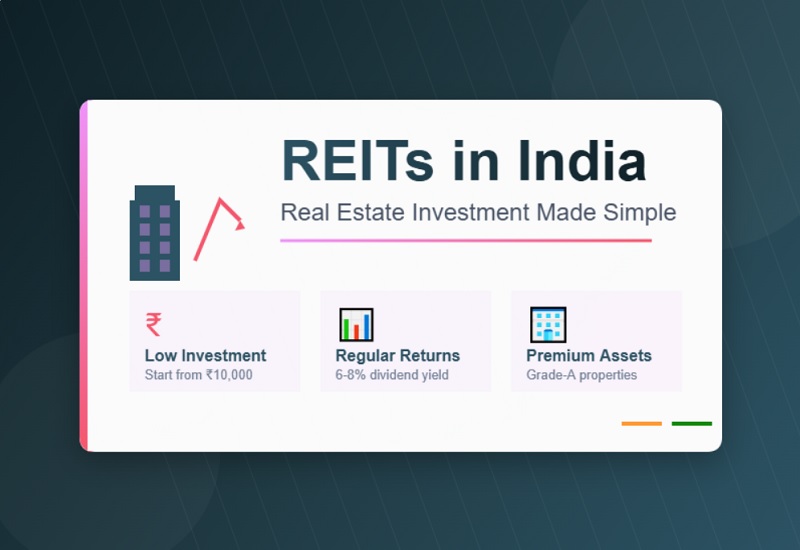
If you’ve ever dreamed of owning a slice of that premium office building in Mumbai or Bangalore but don’t have crores to invest, REITs might be your answer. Let me walk you through everything you need to know about investing in Real Estate Investment Trusts in India.
What Exactly is a REIT?
Think of a REIT as a mutual fund, but instead of stocks and bonds, it invests in real estate. A Real Estate Investment Trust is a company that owns, operates, or finances income-generating real estate properties. When you buy units of a REIT, you’re essentially becoming a part-owner of multiple commercial properties without the hassle of being a landlord.
The beauty of REITs? They allow everyday investors like you and me to earn rental income from commercial real estate that would otherwise be out of reach.
How Do REITs Work in India?
REITs in India operate under strict regulations set by the Securities and Exchange Board of India (SEBI). Here’s how the whole system works:
The Structure
When a real estate company wants to create a REIT, it bundles together several income-generating properties (usually office spaces, malls, or warehouses) into a trust. This trust is then listed on the stock exchange, where investors can buy units.
The Money Flow
The properties in the REIT generate rental income from tenants. After deducting operating expenses and management fees, the REIT distributes at least 90% of this income to unitholders as dividends. This is where you make your money—through regular dividend payments and potential appreciation in unit prices.
The Players Involved
There are four key players in any REIT structure:
Sponsor: The original real estate company that sets up the REIT and typically retains a minimum 25% stake for at least three years.
Trustee: An independent entity that holds the assets on behalf of investors and ensures compliance with regulations.
Manager: Manages the day-to-day operations of the properties and makes strategic decisions about acquisitions and disposals.
Unitholders: That’s you—the investors who buy units and receive distributions.
SEBI Requirements for REITs in India
SEBI has established clear guidelines to protect investors:
- Minimum asset size of ₹500 crores
- At least 80% of assets must be in completed and income-generating properties
- Up to 20% can be in under-construction properties, listed/unlisted equity, or mortgage-backed securities
- Minimum of 90% of net distributable cash flow must be distributed to unitholders
- Minimum public float of 25%
- Individual investment limit of ₹10,000-₹15,000 per unit (varies by REIT)
REITs Currently Listed in India
As of now, India has three operational REITs trading on the NSE and BSE:
Embassy Office Parks REIT
Launched in April 2019 as India’s first REIT, Embassy focuses on Grade-A office spaces primarily in Bangalore, Mumbai, Pune, and the National Capital Region. It’s backed by Embassy Group and Blackstone.
Mindspace Business Parks REIT
Listed in August 2020, Mindspace owns and manages office parks in Mumbai, Pune, Hyderabad, and Chennai. It’s promoted by the K Raheja Corp Group.
Brookfield India Real Estate Trust
Launched in February 2021, this REIT focuses on office properties in key Indian cities and is backed by Brookfield Asset Management.
Why Should You Consider Investing in REITs?
Regular Income Stream
REITs are required to distribute 90% of their income, which means you get steady dividend payments—typically on a quarterly basis. Current dividend yields from Indian REITs range between 6-8%.
Real Estate Exposure Without the Headaches
You get to invest in premium commercial real estate without dealing with property management, tenant issues, or maintenance nightmares.
Liquidity
Unlike physical real estate that can take months to sell, REIT units are traded on stock exchanges. You can buy or sell them just like stocks during market hours.
Diversification
A single REIT typically owns multiple properties across different locations, giving you instant diversification within the real estate sector.
Professional Management
Experienced teams handle property management, tenant relationships, and strategic decisions, so you benefit from their expertise.
Inflation Hedge
Rental income typically increases with inflation, and property values tend to appreciate over time, helping preserve your purchasing power.
The Risks You Should Know About
Let me be honest—REITs aren’t risk-free investments. Here’s what you should watch out for:
Market Volatility
REIT unit prices fluctuate based on market conditions, interest rates, and investor sentiment. You could see your investment value decline in the short term.
Interest Rate Sensitivity
When interest rates rise, REITs often suffer because borrowing becomes expensive for them, and fixed-income investments become more attractive to investors.
Economic Downturns
During recessions, companies may downsize or close offices, affecting occupancy rates and rental income. The COVID-19 pandemic was a stark reminder of this risk.
Concentration Risk
Most Indian REITs focus heavily on office spaces. If the office real estate market struggles, your investment takes a hit.
Limited Growth Potential
Since REITs must distribute 90% of income, they have limited cash to reinvest in new properties or improvements, which can cap long-term growth.
How to Invest in REITs in India
Getting started is straightforward:
Step 1: Open a Demat and Trading Account
You need these to buy and sell REIT units on the stock exchange, just like you would for stocks.
Step 2: Research Available REITs
Look at their property portfolios, occupancy rates, tenant quality, dividend history, and management track record.
Step 3: Check Your Investment Amount
Most REIT units trade between ₹250-₹450 per unit, making them accessible to retail investors.
Step 4: Place Your Order
Log into your trading platform, search for the REIT you want (they have specific ticker symbols), and place a buy order.
Step 5: Monitor Your Investment
Keep track of quarterly results, occupancy rates, and distribution announcements.
Tax Treatment of REIT Investments
Understanding taxes is crucial for calculating your actual returns:
Dividend Income: Taxed at your applicable income tax slab rate. The REIT deducts TDS at 10% before distribution.
Capital Gains on Sale:
- Short-term (held less than 36 months): Taxed at your income tax slab rate
- Long-term (held more than 36 months): Taxed at 20% after indexation benefits
This tax treatment is less favorable compared to equity mutual funds, so factor this into your decision.
Who Should Invest in REITs?
REITs might be right for you if:
- You want regular income in addition to potential capital appreciation
- You’re looking to diversify beyond stocks and bonds
- You want real estate exposure without buying physical property
- You have a medium to long-term investment horizon (3-5 years minimum)
- You’re comfortable with moderate risk and market volatility
REITs might not be suitable if:
- You need guaranteed returns or capital protection
- You’re looking for short-term gains
- You’re in a very high tax bracket (dividends are taxed at slab rates)
- You already have significant real estate exposure
Key Metrics to Evaluate REITs
When analyzing REITs, pay attention to these metrics:
Occupancy Rate: Higher is better—aim for REITs with 85%+ occupancy.
Weighted Average Lease Expiry (WALE): Longer WALE means more stable income. Look for 5+ years.
Funds From Operations (FFO): A better measure of REIT performance than net income.
Distribution Yield: The annual distribution per unit divided by the current unit price.
Debt-to-Assets Ratio: Lower is safer—most Indian REITs maintain this below 35%.
Tenant Quality: Blue-chip tenants mean lower default risk.
The Future of REITs in India
The REIT market in India is still in its infancy compared to markets like the US or Singapore. However, the future looks promising:
SEBI has been gradually relaxing norms to make REITs more attractive. There’s growing awareness among retail investors about this asset class. More real estate developers are considering the REIT route for monetizing their portfolios. We might soon see REITs in other segments like warehouses, data centers, or even residential properties.
The work-from-home trend has raised questions about office space demand, but quality Grade-A properties with good locations continue to attract tenants.
Final Thoughts
REITs offer an interesting middle ground between the stability of debt instruments and the growth potential of equities. They’re not a get-rich-quick scheme, but they can be a solid component of a diversified investment portfolio.
Before you invest, do your homework. Understand the properties in the portfolio, check the tenant mix, analyze historical distributions, and consider your own financial goals and risk appetite. And remember, like any investment, don’t put all your eggs in one basket.
Real estate investment no longer requires you to be a crorepati. With REITs, you can start small and gradually build your real estate portfolio alongside your regular job. That’s the democratization of real estate investment that India needed.
Disclaimer: This article is for educational purposes only and should not be considered financial advice. Please consult with a qualified financial advisor before making investment decisions.
Have you invested in REITs? What has your experience been? Share your thoughts in the comments below!