Renting vs Buying a Home in India: Which is better
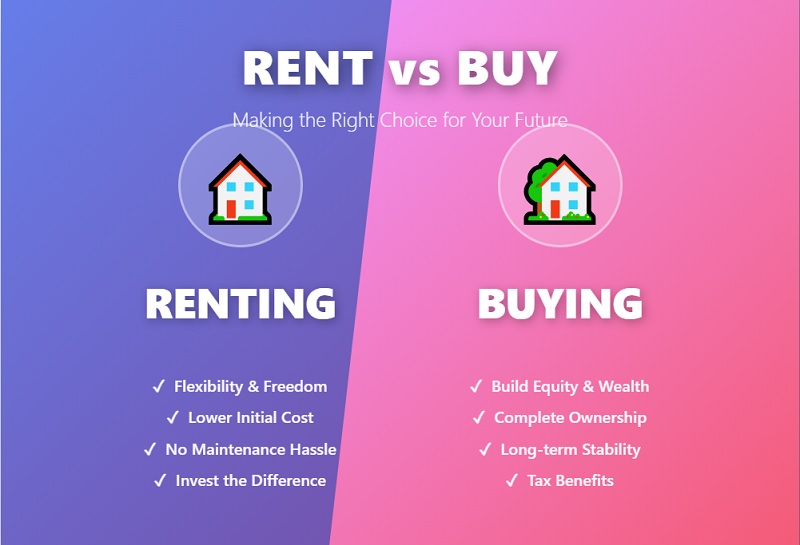
The rent versus buy debate has kept countless Indians awake at night, myself included. I remember sitting in my 2BHK rental in Gurgaon three years ago, paying ₹25,000 monthly rent and wondering if I was just “throwing money away” while my friends were buying flats. Today, as a homeowner, I’ve learned the answer isn’t as simple as our parents make it sound.
Understanding the Real Cost of Home ownership in India
When my wife and I bought our first flat in Noida in 2021, we thought our ₹35,000 monthly EMI was reasonable compared to our ₹25,000 rent. What we didn’t account for was everything else that came with the “dream of owning a home.”
The Hidden Costs Nobody Warns You About
Property tax in our society added ₹8,000 annually (₹667 monthly). Home loan insurance was another ₹15,000 per year. Society maintenance charges were ₹4,500 monthly for our 1,200 sq ft flat. Then came the corpus fund contribution of ₹2 lakh at the time of possession, which we hadn’t budgeted for.
Plus, we needed to spend ₹8 lakhs on interiors, modular kitchen, wardrobes, and basic furnishings because the builder gave us a bare shell. Most people take a personal loan for this, adding another EMI.
Suddenly, our “affordable” EMI became a ₹45,000+ monthly reality, not including the ₹15 lakh down payment (including registration, stamp duty, and other charges) we’d saved for years.
The True Financial Picture in Indian Context
Let me break down what owning actually costs beyond the home loan EMI:
Monthly ownership expenses typically include:
- Home loan EMI (principal and interest)
- Society maintenance charges (₹3-6 per sq ft monthly)
- Property tax (varies by city and property value)
- Home insurance
- Sinking fund contributions
- Repair and maintenance reserves
- Higher electricity and water bills
- Parking charges (if additional)
Example: For a ₹75 lakh flat in a tier-1 city with 20% down payment (₹15 lakhs) at 8.5% interest for 20 years, your total monthly outflow looks like this:
- EMI: ₹52,000
- Maintenance: ₹5,000
- Property tax: ₹800
- Insurance: ₹1,500
- Total: ₹59,300 per month
The same flat might rent for ₹25,000-30,000 monthly.
When Renting Makes More Financial Sense
1. You’re in the Early Career Stage
Rahul, a 26-year-old software engineer in Bangalore, earns ₹12 lakhs annually. He could technically afford a ₹40 lakh flat with a bank loan, but he’s smart enough to rent instead.
Why renting works for Rahul:
- His ₹18,000 monthly rent is far less than a ₹35,000 EMI would be
- He’s investing the difference of ₹17,000 in mutual funds (SIP)
- He has job flexibility to move to Hyderabad or Pune for better opportunities
- He’s building an emergency fund and equity portfolio
- After 5 years, his investments could become the down payment for a better property
2. Job Stability Is Uncertain
In today’s dynamic job market, especially in IT and startups, job security isn’t guaranteed. I’ve seen colleagues lose their jobs during layoffs and struggle with EMI payments. Rent gives you the flexibility to downsize quickly if needed.
3. The City You’re In Is Temporary
If you’re on a 2-3 year project in Pune but your family is in Delhi, buying doesn’t make sense. Many IT professionals I know have bought flats in cities they eventually left, turning them into reluctant landlords dealing with tenant issues from another city.
4. When Rent-to-Price Ratio Is Favorable
Financial experts suggest looking at the price-to-rent ratio. If annual rent is less than 5% of the property price, renting is often more economical.
Example: A ₹1 crore flat renting for ₹30,000/month
- Annual rent: ₹3.6 lakhs
- Ratio: 3.6% of property value
- Verdict: Renting is economical here
5. You Want to Invest Elsewhere
My friend Priya, a doctor in Mumbai, deliberately rents despite earning well. She pays ₹40,000 rent but invests ₹1.5 lakhs monthly in equity markets, REITs, and her own clinic expansion. Her investment portfolio has grown 45% in three years, far outpacing property appreciation in her area.
When Buying a Home Makes Sense
1. You’ve Found Your “Forever City”
After changing three cities in 10 years, I finally settled where my parents live, my wife’s job is stable, and we plan to raise our daughter. That’s when buying made sense. We’re not moving, so long-term appreciation matters more than short-term flexibility.
2. Rental Yields Are Poor But You Need Stability
In many Indian cities, landlords ask you to vacate with short notice, especially if you have pets or elderly parents. My cousin in Delhi changed houses four times in five years before buying. The emotional toll and constant shifting costs add up.
3. Tax Benefits Work in Your Favor
If you’re in the 30% tax bracket, home loan benefits can be substantial:
- Section 80C: Up to ₹1.5 lakh deduction on principal repayment
- Section 24(b): Up to ₹2 lakh deduction on interest for self-occupied property
- Section 80EEA: Additional ₹1.5 lakh deduction for first-time buyers (certain conditions apply)
Real example: On a ₹50 lakh loan at 8.5% interest, you pay about ₹4 lakh in interest during the first year. With 30% tax bracket, that’s ₹60,000+ in tax savings annually.
4. Property Prices Are Reasonable in Your Area
Some tier-2 and tier-3 cities have reasonable property prices. A friend bought a 3BHK in Indore for ₹45 lakhs. His EMI of ₹38,000 is barely more than comparable rent (₹30,000), making ownership sensible.
5. You Have Substantial Down Payment (30-40%)
The more you put down, the lower your EMI burden. If you can put down ₹30-40 lakhs on a ₹1 crore property, your EMI becomes manageable, and you’re less leveraged.
The Emotional vs. Financial Decision
Here’s what nobody tells you: buying a home in India is rarely a purely financial decision.
The Emotional Pros of Owning
- Security: No landlord can ask you to vacate
- Freedom: Paint walls purple, get a pet, renovate as you wish
- Social status: Yes, it matters in Indian society for marriage, social circles
- Legacy: Passing property to children feels meaningful
- Stability for kids: No school changes mid-session due to shifting
The Emotional Cons of Owning
- Trapped feeling: Can’t easily relocate for better jobs
- Maintenance stress: Every leak, lift issue becomes YOUR problem
- Society politics: AGM meetings, committee drama, neighbor disputes
- Illiquid asset: Can’t sell quickly if you need money
- Market watching anxiety: Constantly checking property prices
Running the Numbers: A Real Comparison
Let me show you a detailed 10-year comparison using real numbers from Gurgaon:
Scenario A: Buying a ₹80 Lakh Flat
Initial costs:
- Down payment: ₹16 lakhs (20%)
- Stamp duty & registration: ₹4.8 lakhs (6%)
- Loan processing, legal fees: ₹1 lakh
- Basic interiors: ₹6 lakhs
- Total upfront: ₹27.8 lakhs
Monthly outflow:
- EMI (₹64 lakhs at 8.5% for 20 years): ₹55,000
- Maintenance: ₹5,500
- Property tax: ₹1,000
- Total: ₹61,500/month
10-year cost: ₹27.8 lakhs + (₹61,500 × 120) = ₹101.6 lakhs Loan outstanding after 10 years: ₹45 lakhs Property value (assuming 4% annual appreciation): ₹1.18 crores Net position: ₹1.18 crore – ₹45 lakh = ₹73 lakh equity
Scenario B: Renting + Investing
Starting rent: ₹28,000/month (5% increase annually) Investment: ₹33,500 monthly (difference in cost) Lump sum investment: ₹27.8 lakhs upfront
10-year calculation:
- Total rent paid: ₹43.2 lakhs (with annual increases)
- Investment value of monthly SIPs at 12% return: ₹77 lakhs
- Initial ₹27.8 lakh investment at 12% return: ₹86 lakhs
- Net position: ₹86 + ₹77 – ₹43.2 = ₹1.20 crore
The Verdict
In this scenario, renting + investing gives you more liquidity and comparable returns. However, the homeowner has a tangible asset and isn’t subject to rent increases or displacement.
Smart Strategies for Indians
If You’re Buying:
- Buy under-construction only if builder is reputed (check RERA ratings)
- Negotiate hard during market slowdowns (June-August, December)
- Choose location over size – Better to buy 2BHK in good locality than 3BHK in remote area
- Check water source, power backup, connectivity – These impact resale value
- Verify all clearances – OC, CC, NOC from fire department
- Keep 25-30% down payment to reduce EMI burden
- Consider joint home loan with spouse for higher eligibility and tax benefits
- Build 6-month EMI emergency fund before buying
If You’re Renting:
- Negotiate annual rent – Most landlords prefer stable tenants over 10% more rent
- Sign proper agreement – Register if rent exceeds ₹1 lakh annually
- Document everything – Photos at move-in prevent deposit disputes
- Invest the difference – Don’t just save it, put it in wealth-building assets
- Get tenant insurance – Costs ₹3,000-5,000 annually, covers up to ₹10 lakhs
- Build credit score – You might buy eventually; start preparing now
The Middle Path: Buying in Your Hometown
Here’s a strategy many NRIs and metro professionals use:
Buy a flat in your tier-2/3 hometown where properties are cheaper. Rent it out or let parents stay. This gives you:
- An appreciating asset in your name
- Tax benefits on home loan
- A safety net if metro life doesn’t work out
- Rental income if parents don’t need it
- Lower EMI pressure (₹50 lakh hometown flat vs ₹1 crore metro flat)
My colleague Amit bought in Jaipur while working in Bangalore. His ₹28,000 EMI is less than his ₹32,000 Bangalore rent, and his parents stay in that house.
Red Flags: When NOT to Buy
Don’t buy if:
- You’re financing more than 80% through loan
- The EMI exceeds 40% of your take-home salary
- You haven’t saved 6-month emergency fund separately
- You’re buying because “everyone else is” (FOMO)
- Property prices in your city rose 20%+ last year (possible bubble)
- Builder has delayed projects or RERA complaints
- Society has pending litigation or structural issues
- You’re planning to shift cities within 3-5 years
- You need to liquidate all investments for down payment
My Personal Recommendation
After analyzing hundreds of cases and living both sides of this debate, here’s my honest take:
Rent if:
- You’re under 30 and building your career
- You value flexibility and experiences over assets
- You’re disciplined enough to invest the savings
- You’re in an expensive metro with high property prices
Buy if:
- You’re 35+ with stable income and family
- You’ve found your permanent city
- Property prices in your area are reasonable
- You have 30%+ down payment ready
- Job security is strong
- You value emotional security over returns
The 40-30-30 Rule I Follow:
- 40% of income for all living expenses (rent/EMI, utilities, food)
- 30% for investments and savings
- 30% for lifestyle and discretionary spending
If buying pushes your EMI beyond 40% of income, you’re over-leveraged.
Final Thoughts: It’s Your Journey
Three years into homeownership, I don’t regret buying, but I also don’t judge friends who rent. My sister rents in Mumbai and has built a ₹45 lakh investment portfolio. My brother owns a house and loves the stability for his kids.
The question isn’t which is objectively better. The question is: What aligns with YOUR life stage, financial goals, and personal values?
Don’t let societal pressure, parents’ expectations, or friends’ Instagram posts of housewarming parties dictate your decision. Run the numbers, assess your priorities, and choose consciously.
Whether you rent or buy, what matters is that you’re building wealth, living within your means, and creating the life you want.
What’s your take on the rent vs. buy debate? Have you made a decision you’re happy with? Share your story in the comments below!
Frequently Asked Questions
Q: Is paying rent really “wasting money”? A: No. Rent buys you housing, flexibility, and maintenance-free living. By that logic, EMI interest (which is often more than rent initially) is also “wasted” money. Both are costs of living.
Q: Will property prices always go up? A: No. Many Indian cities saw stagnant or declining prices from 2014-2020. Real estate is cyclical. Don’t assume guaranteed appreciation.
Q: Should I buy under-construction to save money? A: Only from RERA-registered, reputed builders. Under-construction delays are common. Factor in 1-2 year rent during construction delays.
Q: Can I rent out my flat to cover EMI? A: Rarely works. Rental yield in most Indian metros is 2-3% annually. Your EMI will be higher than rental income for many years.
Q: What if I buy and need to relocate? A: You become a landlord (with tenant headaches) or sell (paying 1-2% brokerage, possible losses). Both reduce flexibility.
Disclaimer: This article provides general information and personal experiences. Please consult a financial advisor for advice specific to your situation. Real estate decisions should be based on thorough research and individual circumstances.