Mid Cap Funds in India: Complete Investment Guide for 2026
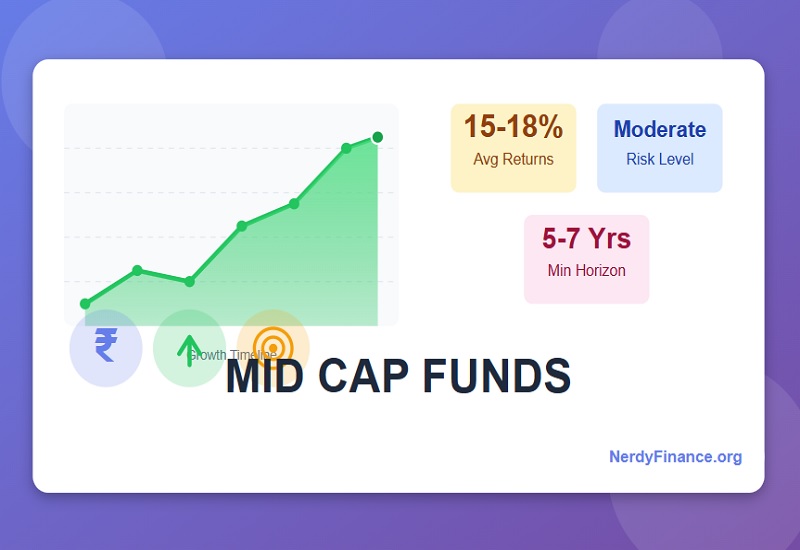
Mid cap mutual funds have emerged as one of the most attractive investment options for investors seeking higher returns with moderate risk. These funds invest in companies ranked between 101 and 250 by market capitalization, offering a perfect balance between the stability of large caps and the growth potential of small caps.
In this comprehensive guide, we’ll explore everything you need to know about mid cap funds, from their performance and benefits to investment strategies and taxation.
What Are Mid Cap Funds?
Mid cap funds are equity mutual funds that primarily invest in mid-sized companies. According to SEBI regulations, these funds must invest at least 65% of their assets in mid cap stocks, which are companies ranked 101st to 250th by market capitalization.
These companies typically have a market cap ranging from ₹5,000 crores to ₹20,000 crores. They represent businesses that have moved beyond the startup phase but still possess significant growth potential.
Key Characteristics of Mid Cap Funds
- Higher Growth Potential: Mid cap companies often grow faster than established large caps
- Moderate Risk: Less volatile than small caps but more than large caps
- Diversification Benefits: Access to emerging industry leaders
- Long-term Wealth Creation: Historical outperformance over 5-10 year periods
Why Invest in Mid Cap Mutual Funds?
1. Superior Returns
Mid cap funds have historically delivered impressive returns over long investment horizons. Over the past decade, the mid cap category has generated average returns of 15-18% annually, outperforming both large cap and diversified equity funds during bull markets.
2. Growth at Reasonable Valuations
Mid cap companies often trade at more attractive valuations compared to large cap peers, yet they possess strong growth prospects. This combination offers investors the opportunity to buy quality businesses before they become market leaders.
3. Emerging Market Leaders
Many of today’s blue-chip companies were once mid caps. By investing in mid cap funds, you gain exposure to tomorrow’s market leaders at an early stage of their growth journey.
4. Portfolio Diversification
Adding mid cap funds to your portfolio provides diversification beyond large cap holdings, helping to enhance overall returns while managing risk effectively.
Average Returns
15-18% CAGR over 10 years, with potential for higher returns during market upswings
Risk Level
Moderate to High – More volatile than large caps but less than small caps
Investment Horizon
Minimum 5-7 years recommended for optimal returns
Risks Associated with Mid Cap Funds
While mid cap funds offer attractive return potential, investors should be aware of the associated risks:
1. Higher Volatility
Mid cap stocks experience greater price fluctuations compared to large caps. During market corrections, mid cap funds can decline more sharply, requiring strong conviction and patience from investors.
2. Liquidity Concerns
Mid cap stocks generally have lower trading volumes than large caps, which can lead to liquidity issues during market stress or when fund managers need to rebalance portfolios.
3. Business Risk
Mid-sized companies are more vulnerable to economic downturns, competitive pressures, and execution challenges compared to established large cap companies.
4. Concentration Risk
Some mid cap funds may be concentrated in specific sectors or stocks, increasing portfolio risk if those areas underperform.
Risk Management Tips
- Invest with a minimum 5-7 year time horizon
- Use SIP (Systematic Investment Plan) to average out volatility
- Don’t allocate more than 20-30% of your equity portfolio to mid caps
- Review portfolio performance annually, not monthly
- Stay invested during market corrections for long-term gains
Who Should Invest in Mid Cap Funds?
Mid cap funds are suitable for:
- Aggressive Investors: Those with high risk appetite seeking superior returns
- Long-term Wealth Creators: Investors with 7+ year investment horizon
- Young Professionals: Those who can ride out market volatility
- Portfolio Diversifiers: Investors looking to add growth-oriented assets
Mid cap funds may not be suitable for conservative investors, retirees, or those with short-term financial goals.
Taxation on Mid Cap Funds
As equity-oriented funds, mid cap mutual funds are subject to the following tax treatment:
Short-term Capital Gains
Units held for less than 12 months are taxed at 15% plus applicable cess
Long-term Capital Gains
Units held for more than 12 months are taxed at 10% on gains exceeding ₹1 lakh per financial year
Investment Strategies for Mid Cap Funds
1. Systematic Investment Plan (SIP)
SIP is the most recommended approach for mid cap fund investments. By investing a fixed amount monthly, you benefit from rupee cost averaging and reduce the impact of market timing risks.
2. Lump Sum During Market Corrections
Experienced investors can consider lump sum investments during significant market corrections when mid cap valuations become attractive.
3. Portfolio Allocation Strategy
Financial experts recommend allocating 20-30% of your equity portfolio to mid cap funds, with the balance in large cap and multi-cap funds for optimal diversification.
4. Review and Rebalance
Review your mid cap fund investments annually. Consider rebalancing if a fund consistently underperforms its benchmark or peers for 2-3 years.
How to Select the Best Mid Cap Fund
Consider these factors when choosing a mid cap fund:
- Consistent Performance: Look for funds that have outperformed their benchmark across 3, 5, and 10-year periods
- Fund Manager Track Record: Experienced fund managers with proven expertise in mid cap investing
- Expense Ratio: Lower expense ratios mean higher returns for you. Look for funds with expense ratios below 1%
- Portfolio Quality: Analyze the fund’s top holdings and sector allocation
- Fund Size: Very large funds (AUM above ₹10,000 crores) may face challenges in deploying capital efficiently in mid caps
- Risk Metrics: Check standard deviation and Sharpe ratio to understand risk-adjusted returns
Mid Cap Funds vs Other Equity Categories
| Parameter | Large Cap | Mid Cap | Small Cap |
|---|---|---|---|
| Return Potential | Moderate (12-14%) | High (15-18%) | Very High (18-22%) |
| Risk Level | Low to Moderate | Moderate to High | High |
| Volatility | Low | Moderate | High |
| Investment Horizon | 3-5 years | 5-7 years | 7-10 years |
Common Mistakes to Avoid
- Chasing Recent Performance: Don’t invest solely based on last year’s returns
- Panic Selling: Avoid redeeming during market downturns
- Over-allocation: Don’t invest your entire equity portfolio in mid caps
- Short-term Thinking: Mid caps require patience and time to deliver results
- Ignoring Expense Ratios: High costs can significantly reduce your returns over time
Frequently Asked Questions
Are mid cap funds good for long-term investment?
Yes, mid cap funds are excellent for long-term wealth creation. With a 7-10 year investment horizon, they have historically delivered superior returns compared to large cap funds while managing risk better than small cap funds.
How much should I invest in mid cap funds?
Financial advisors typically recommend allocating 20-30% of your equity portfolio to mid cap funds. The exact allocation depends on your risk appetite, age, and investment goals.
Is SIP better than lumpsum for mid cap funds?
SIP is generally recommended for mid cap funds as it helps average out market volatility and removes the stress of timing the market. However, lumpsum investments can work well during significant market corrections.
Can I lose money in mid cap funds?
Yes, like all equity investments, mid cap funds carry market risk. Your investment value can decline in the short term. However, with a long-term horizon of 5-7 years, the probability of positive returns increases significantly.
When should I exit a mid cap fund?
Consider exiting if the fund consistently underperforms its benchmark and peers for 2-3 years, if there’s a change in fund management philosophy, or when you need the money for your financial goals. Avoid exiting during temporary market corrections.
Conclusion
Mid cap funds represent an excellent investment opportunity for growth-oriented investors with a moderate to high risk appetite. Their ability to generate superior returns over long periods, combined with exposure to emerging market leaders, makes them an essential component of a well-diversified equity portfolio.
However, success with mid cap funds requires patience, discipline, and a long-term perspective. By investing through SIPs, maintaining proper asset allocation, and staying invested through market cycles, you can harness the wealth-creation potential of mid cap funds.
Remember to conduct thorough research, understand your risk tolerance, and consult with a financial advisor before making investment decisions. Start your mid cap investment journey today and position yourself for long-term financial success.
Disclaimer: This article is for educational purposes only and should not be considered financial advice. Please consult with a certified financial advisor before making investment decisions. Past performance does not guarantee future results.