How to Create a Budget: Complete Beginner’s Guide
Are you living paycheck to paycheck? Do you wonder where all your money goes every month? You’re not alone. Over 60% of Indians don’t have a written budget, and it’s costing them lakhs in lost savings and financial stress.
The good news? Creating a budget is simpler than you think, and it can transform your financial life in just 30 days.
In this comprehensive guide, you’ll learn exactly how to create a budget that actually works—no complex spreadsheets or financial jargon required.
Table of Contents
- What is a Budget and why you Need One?
- The Real Cost of Not Having a Budget
- How to Create a Budget: Step-by-Step Process
- Best Budgeting Methods
- Budget Categories You Must Include
- Common Budgeting Mistakes to Avoid
- How to Stick to Your Budget
What is a Budget and Why You Need One?
A budget is simply a plan for your money. It tells you where your income is going and helps you decide where you want it to go instead.
Think of it as a GPS for your finances. Without it, you’re driving blind. With it, you reach your financial destinations faster and with less stress.
Why Creating a Budget Changes Everything
Financial Control: You decide where every rupee goes instead of wondering where it went.
Goal Achievement: Want to buy a home? Start a business? A budget turns dreams into actionable plans with clear timelines.
Stress Reduction: Money fights are the leading cause of relationship stress. A budget eliminates the guesswork and reduces conflicts.
Wealth Building: The average person who budgets saves 3-5 times more than those who don’t. That’s the difference between retiring comfortably and working until 70.
Emergency Preparedness: Life happens. Medical emergencies, job loss, urgent repairs—a budget ensures you’re prepared for the unexpected.
The Real Cost of Not Having a Budget
Let’s talk numbers. If you earn ₹50,000 per month and waste just 10% on unnecessary expenses, that’s ₹5,000 monthly or ₹60,000 annually.
Over 10 years, that’s ₹6 lakhs gone—money that could have become ₹12-15 lakhs if invested wisely.
Common Signs You Need a Budget Today
- You’re not sure how much you spent last month
- You rely on credit cards to get through the month
- You have no emergency fund
- You’re making good money but have little savings
- You stress about money regularly
- You avoid checking your bank balance
- You fight with your spouse about spending
If you checked even two boxes above, keep reading. This guide will change your financial life.
How to Create a Budget: Step-by-Step Process
Creating a budget isn’t complicated. Follow these 7 simple steps and you’ll have a working budget in under an hour.
Step 1: Calculate Your Monthly Income
Start with your take-home pay—the amount that actually hits your bank account after taxes and deductions.
For Salaried Individuals:
- Monthly salary (after tax deductions)
- Bonus/incentives (average monthly amount)
- Rental income
- Interest income
- Any side income
Example:
- Salary: ₹55,000
- Rental income: ₹8,000
- Freelance work: ₹5,000
- Total Monthly Income: ₹68,000
Pro Tip: Use your lowest monthly income if it varies. This creates a safety buffer for leaner months.
Step 2: Track Your Current Spending
You can’t manage what you don’t measure. Track every expense for 30 days to understand your spending patterns.
How to Track:
Method 1 – Manual Tracking: Carry a small notebook and note every expense, no matter how small. That ₹20 chai adds up to ₹600 monthly!
Method 2 – Bank Statement Analysis: Download your last 3 months of bank statements and credit card bills. Categorize every transaction.
Method 3 – Use Apps: Apps that automatically track expenses from SMS notifications.
Categories to Track:
- Housing (rent/EMI, maintenance)
- Utilities (electricity, water, internet, phone)
- Food (groceries, dining out)
- Transportation (fuel, public transport, vehicle maintenance)
- Insurance premiums
- Loan EMIs
- Entertainment
- Healthcare
- Education
- Personal care
- Shopping
- Subscriptions
- Miscellaneous
Step 3: List Your Fixed Expenses
Fixed expenses stay the same every month. These are your non-negotiables.
Common Fixed Expenses:
- Rent/Home loan EMI
- Society maintenance
- Insurance premiums
- Loan EMIs (car, personal, education)
- Internet/broadband
- Phone bills
- Subscriptions (Netflix, gym, etc.)
- School fees
- SIP investments
Example Fixed Expenses (₹68,000 income):
- Rent: ₹18,000
- Home loan EMI: ₹12,000
- Car loan EMI: ₹8,000
- Insurance: ₹3,000
- Internet + Phone: ₹1,500
- Subscriptions: ₹1,000
- Total Fixed: ₹43,500
Step 4: List Your Variable Expenses
Variable expenses change month to month, but you can estimate averages.
Common Variable Expenses:
- Groceries
- Electricity bill
- Fuel/transportation
- Dining out
- Entertainment
- Shopping
- Personal care
- Medical expenses
- Gifts
- Travel
Example Variable Expenses:
- Groceries: ₹8,000
- Electricity: ₹2,000
- Fuel: ₹4,000
- Dining/entertainment: ₹3,000
- Shopping: ₹2,000
- Miscellaneous: ₹2,000
- Total Variable: ₹21,000
Step 5: Set Your Savings Goals
This is where most people get it wrong. They save whatever is left at the end of the month (usually nothing).
The right way: Pay yourself first. Treat savings as a non-negotiable expense.
Savings Breakdown:
Emergency Fund (Top Priority): Start with ₹1,000, then build to 6 months of expenses. This is your financial safety net.
Short-term Goals (1-3 years):
- Wedding fund
- Car down payment
- Vacation
- Home renovation
Long-term Goals (3+ years):
- Home down payment
- Children’s education
- Retirement
- Financial independence
Recommended Savings Rate:
- Minimum: 20% of income
- Ideal: 30-40% of income
- Aggressive: 50%+ (for FIRE enthusiasts)
Example Savings (₹68,000 income):
- Emergency fund: ₹2,000
- SIP/investments: ₹5,000
- Children’s education fund: ₹3,000
- Total Savings: ₹10,000 (15% – needs improvement)
Step 6: Do the Math
Now comes the moment of truth. Let’s see if your budget balances.
The Budget Equation: Income – Fixed Expenses – Variable Expenses – Savings = Zero (or positive)
Our Example:
- Income: ₹68,000
- Fixed expenses: ₹43,500
- Variable expenses: ₹21,000
- Savings: ₹10,000
- Balance: -₹6,500 (DEFICIT!)
If you’re in deficit like this example, don’t panic. Move to Step 7.
Step 7: Adjust and Balance Your Budget
A deficit means you’re spending more than you earn. Here’s how to fix it:
Option 1 – Cut Variable Expenses:
- Reduce dining out from ₹3,000 to ₹1,500 (save ₹1,500)
- Lower shopping budget from ₹2,000 to ₹1,000 (save ₹1,000)
- Pack lunch 3 days/week (save ₹2,000)
- Cancel unused subscriptions (save ₹500)
- Total saved: ₹5,000
Option 2 – Reduce Fixed Expenses:
- Refinance high-interest loans
- Move to a slightly cheaper apartment
- Negotiate insurance premiums
- Carpool or use public transport
Option 3 – Increase Income:
- Ask for a raise
- Start a side hustle
- Freelance in your spare time
- Rent out unused space
- Sell unused items
Balanced Budget After Adjustments:
- Income: ₹68,000
- Fixed expenses: ₹43,500
- Variable expenses: ₹16,000 (reduced)
- Savings: ₹8,500
- Balance: ₹0 (PERFECT!)
Best Budgeting Methods
Different budgeting methods work for different people. Try these proven approaches:
1. The 50/30/20 Rule (Most Popular)
This is the simplest budgeting method, perfect for beginners.
How it works:
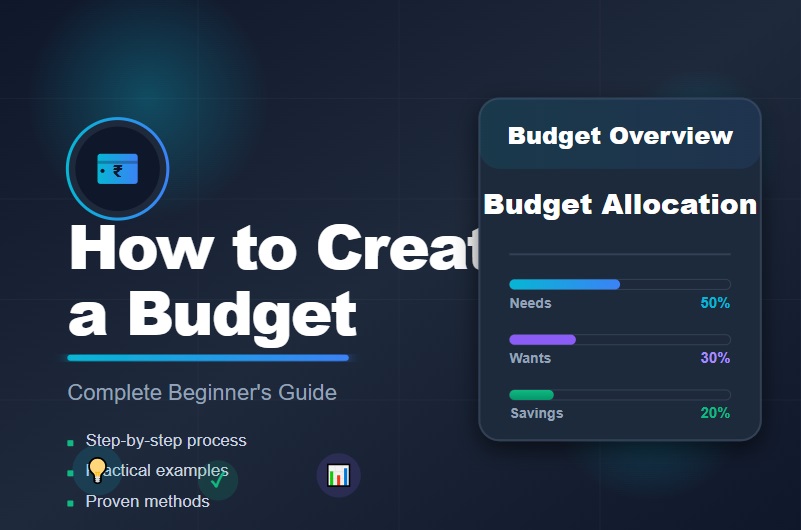
- 50% Needs: Essential expenses (rent, utilities, groceries, EMIs)
- 30% Wants: Non-essentials (entertainment, dining out, hobbies)
- 20% Savings: Emergency fund, investments, debt repayment
Example for ₹60,000 income:
- Needs: ₹30,000
- Wants: ₹18,000
- Savings: ₹12,000
Best for: Beginners, those with stable income, people who want simplicity.
2. Zero-Based Budgeting
Every rupee gets a job. Income minus expenses and savings equals zero.
How it works: Assign every single rupee a purpose before the month begins. When you spend money, you’re spending according to plan, not on impulse.
Best for: Detail-oriented people, those serious about debt elimination, high earners who wonder where money goes.
3. Envelope System (Cash-Based)
Withdraw cash and divide it into envelopes for different categories. When an envelope is empty, you stop spending in that category.
How it works:
- Create envelopes: Groceries, Dining Out, Entertainment, Fuel, etc.
- Allocate cash to each envelope monthly
- Spend only what’s in each envelope
- Transfer leftover cash to savings
Best for: Overspenders, credit card users who struggle with control, visual learners.
4. Pay Yourself First Method
Automate savings before you have a chance to spend.
How it works: The day your salary arrives, automatic transfers move money to savings/investment accounts. You budget with what’s left.
Best for: Chronic undersavers, busy professionals, those building wealth aggressively.
5. The 80/20 Budget (Simplified)
Save 20% first, spend the remaining 80% however you want.
How it works:
- Transfer 20% to savings immediately
- Live on the remaining 80%
- No detailed tracking required
Best for: Those who hate detailed budgeting, high earners with spending under control, minimalists.
Common Budgeting Mistakes to Avoid
Learn from others’ mistakes. Here are the top budget killers:
1. Being Too Restrictive
The mistake: Cutting out all fun and enjoyment.
The fix: Budget for guilt-free spending. If you love coffee shop visits, include them! A sustainable budget allows for life’s pleasures.
2. Forgetting Irregular Expenses
The mistake: Budgeting only monthly bills and forgetting annual expenses like insurance renewals, festival shopping, or vehicle servicing.
The fix: List all annual expenses, divide by 12, and set aside that amount monthly. Create a “sinking fund” for irregular expenses.
Example:
- Car insurance: ₹24,000/year = ₹2,000/month
- Festival shopping: ₹36,000/year = ₹3,000/month
- Vehicle servicing: ₹12,000/year = ₹1,000/month
3. Not Tracking Small Expenses
The mistake: “It’s only ₹50, I don’t need to write it down.”
The reality: Small expenses add up. That daily ₹50 chai becomes ₹1,500 monthly and ₹18,000 yearly!
The fix: Track everything for at least 30 days. You’ll be shocked where money leaks.
4. Setting Unrealistic Goals
The mistake: “I’ll save 70% of my income starting this month!”
The fix: Start with 10-15% savings and gradually increase. Sustainable change beats dramatic failure.
5. Giving Up After One Bad Month
The mistake: Overspending one month and abandoning the budget entirely.
The fix: Budgeting is a skill that improves with practice. Review what went wrong, adjust, and start fresh next month.
6. Not Involving Your Spouse/Partner
The mistake: Creating a budget alone when you share finances.
The fix: Budget together. Schedule monthly “money dates” to review finances as a team.
7. Forgetting to Update Your Budget
The mistake: Creating a budget once and never revising it.
The fix: Life changes—salary increases, new expenses arise, goals evolve. Review your budget monthly and adjust quarterly.
How to Stick to Your Budget (The Real Challenge)
Creating a budget is easy. Sticking to it? That’s where most people struggle. Here’s how to succeed:
Week 1: Foundation
Set Up Automatic Transfers: The day your salary arrives, automatically transfer savings to separate accounts. You can’t spend what you don’t see.
Use Separate Accounts:
- Account 1: Bills and fixed expenses
- Account 2: Daily spending
- Account 3: Savings and investments
Delete Saved Payment Information: Remove stored credit cards from shopping sites. That extra friction prevents impulse purchases.
Week 2: Implementation
Check Your Budget Daily: Spend 5 minutes each morning reviewing yesterday’s expenses and today’s planned spending.
Use the 24-Hour Rule: For purchases over ₹1,000, wait 24 hours. Most impulse urges fade.
Pack Your Lunch: This alone saves ₹5,000-8,000 monthly for most people.
Week 3: Adjustment
Review What’s Working: Which categories are under budget? Which are consistently over? Adjust accordingly.
Identify Triggers: What causes you to overspend? Stress? Boredom? Social pressure? Knowing your triggers helps you prepare.
Celebrate Small Wins: Stayed within your dining budget? Transferred money to savings? Celebrate! Positive reinforcement works.
Week 4: Optimization
Find Alternatives:
- Expensive gym → YouTube workout videos
- Daily coffee shop → Home-brewed coffee
- Frequent dining out → Potluck with friends
Negotiate Bills: Call service providers and negotiate better rates for internet, insurance, phone plans. You’ll be surprised how often this works.
Build Buffer Categories: Create small buffer categories for unexpected expenses so one surprise doesn’t derail everything.
Monthly Habits for Budget Success
1. The Monthly Money Meeting (30 minutes):
- Review last month’s spending
- Celebrate wins
- Identify problems
- Adjust next month’s budget
- Update financial goals
2. The Weekly Check-in (10 minutes):
- Review week’s spending
- Check category balances
- Plan for upcoming expenses
- Adjust if needed
3. The Daily Awareness (2 minutes):
- Morning: Check budget before leaving home
- Evening: Log all expenses
- Quick assessment: On track or over?
Final Thoughts: Your Financial Future Starts Now
Creating a budget isn’t about restriction—it’s about freedom that build the life you want.
The perfect budget doesn’t exist. The right budget is the one you’ll actually use. Start simple, stay consistent, and adjust as you learn.
Remember: Every financial success story starts with someone deciding, “Today is the day I take control of my money.”
Today is your day.