
Health Insurance in India: Complete Guide for everyone
- What Exactly is Health Insurance?
- Types of Health Insurance
- What Does Health Insurance Cover?
- Understanding Health Insurance Terms: Your Decoder Guide
- How to Choose the Right Health Insurance Policy?
- Health Insurance Tax Benefits Under Section 80D
- The Cashless vs. Reimbursement Claim Process
- Common Mistakes to Avoid When Buying Health Insurance
Why Health Insurance is Non-Negotiable for Every Indian Family
Imagine this: Your family member suddenly needs emergency surgery. The hospital bill? ₹5 lakhs. Without health insurance, you’re forced to dip into your life savings, sell assets, or worse, compromise on treatment quality. This nightmare scenario affects millions of Indian families every year.
Healthcare costs in India have risen by nearly 14% annually over the past decade. A single hospitalization can wipe out years of savings. Yet, surprisingly, only 34% of Indians have health insurance coverage. If you’re reading this, you’re already ahead of the curve.
What Exactly is Health Insurance?
Health insurance is a contract between you and an insurance company where you pay a premium (monthly or yearly), and in return, the insurer covers your medical expenses when you fall ill or get injured. Think of it as a financial safety net that catches you when medical emergencies strike.
How Does Health Insurance Work in India?
The process is straightforward:
1: Choose Your Policy – Select a health insurance plan that fits your needs and budget.
2: Pay Premiums – Make regular premium payments to keep your policy active.
3: Medical Treatment – When you need medical care, you can either use cashless treatment at network hospitals or pay first and claim reimbursement later.
4: Claim Settlement – The insurance company pays the hospital directly (cashless) or reimburses you based on your policy terms.
Types of Health Insurance Plans Available in India
Individual Health Insurance
Covers a single person against medical expenses. Perfect for young professionals, bachelors, or anyone wanting personalized coverage. Premium depends on your age, health condition, and chosen coverage amount.
Best For: Young professionals, singles, those wanting customized coverage
Average Premium: ₹6,000-₹15,000 per year for ₹5 lakh coverage
Family Floater Health Insurance
One policy covers your entire family (spouse, children, and sometimes parents) under a single sum insured. The coverage is shared among family members. Most cost-effective option for families.
Best For: Families with young children, nuclear families
Average Premium: ₹12,000-₹25,000 per year for ₹10 lakh coverage for 4 members
Senior Citizen Health Insurance
Specifically designed for people above 60 years. These policies consider age-related health issues and have higher premiums but offer essential coverage when health risks are highest.
Best For: Parents above 60 years, grandparents
Average Premium: ₹25,000-₹50,000 per year for ₹5 lakh coverage
Critical Illness Insurance
Provides a lump sum payment upon diagnosis of specific critical illnesses like cancer, heart attack, stroke, or kidney failure. This money can be used for treatment, recovery, or any other purpose.
Best For: Those with family history of critical diseases, additional protection
Average Premium: ₹8,000-₹20,000 per year for ₹10 lakh coverage
Top-Up and Super Top-Up Plans
Works like additional coverage that kicks in after your base policy limit is exhausted. Super top-ups are more flexible and cost-effective, activating after aggregate deductible across all claims in a year.
Best For: Increasing coverage affordably, those with employer health insurance
Average Premium: ₹3,000-₹8,000 per year for ₹10 lakh additional coverage
What Does Health Insurance Cover?
Inclusions (What’s Covered)
Hospitalization Expenses: Room rent, ICU charges, doctor fees, nursing care, and hospital stay costs for illnesses requiring 24+ hours admission.
Pre and Post-Hospitalization: Medical expenses 30-60 days before hospitalization and 60-90 days after discharge are covered.
Daycare Procedures: Over 400 treatments that don’t require 24-hour hospitalization like dialysis, chemotherapy, cataract surgery, and tonsillectomy.
Ambulance Charges: Emergency ambulance costs up to a specified limit, typically ₹1,500-₹3,000 per hospitalization.
AYUSH Treatment: Coverage for Ayurveda, Yoga, Unani, Siddha, and Homeopathy treatments in recognized hospitals.
Domiciliary Hospitalization: Treatment at home when hospitalization is required but not feasible, subject to doctor’s recommendation.
Organ Donor Expenses: Costs related to organ donation for transplants required by the insured person.
Exclusions (What’s NOT Covered)
Pre-Existing Diseases (Initial Period): Health conditions existing before policy purchase are typically covered only after 2-4 years of continuous policy renewal.
Waiting Periods: First 30 days after policy purchase (except accidents), 1-2 years for specific diseases like hernia, cataract, joint replacement.
Cosmetic Surgery: Procedures for aesthetic purposes unless medically necessary after accidents.
Dental Treatment: Routine dental care unless caused by accident or requiring hospitalization.
Alternative Therapies: Experimental or unproven treatments not recognized by medical authorities.
Self-Inflicted Injuries: Injuries from suicide attempts, drug abuse, or intentional self-harm.
War and Nuclear Risks: Injuries from war, nuclear weapons, or radioactive contamination.
Understanding Health Insurance Terms: Your Decoder Guide
Sum Insured: The maximum amount your insurer will pay for all claims during the policy year. Choose ₹5 lakh minimum for individuals, ₹10 lakh for families in tier-1 cities.
Premium: The amount you pay annually or monthly to keep your policy active. Calculated based on age, health, coverage amount, and lifestyle.
Deductible: The initial amount you pay from your pocket before insurance coverage begins. Higher deductible means lower premium.
Co-payment: Percentage of claim amount you must pay (typically 10-30%). Common in senior citizen policies. A 20% copay on ₹1 lakh means you pay ₹20,000.
Room Rent Limit: Maximum daily room rent covered. If actual rent exceeds this, entire claim may be proportionately reduced. Opt for policies without sub-limits.
Network Hospitals: Hospitals tied up with your insurer for cashless treatment. Check if your preferred hospitals are in-network.
No Claim Bonus (NCB): Reward for not making claims. Sum insured increases by 5-50% for each claim-free year, up to 100-200% maximum.
Restoration Benefit: If sum insured exhausts, this feature restores full coverage for remaining policy period. Invaluable during multiple hospitalizations.
How to Choose the Right Health Insurance Policy
Assess Your Coverage Needs
Start by evaluating your family’s health profile. Do you have young children? Aging parents? Any chronic conditions? Are you living in a metro city where healthcare costs are higher?
Recommended Coverage:
- Tier-1 cities (Mumbai, Delhi, Bangalore): ₹10-15 lakh minimum
- Tier-2 cities: ₹7-10 lakh minimum
- Tier-3 cities: ₹5-7 lakh minimum
- Senior citizens: ₹5-10 lakh separate policy
Compare Multiple Plans
Don’t settle for the first policy you see. Use online comparison platforms to evaluate premiums, coverage, claim settlement ratios, and features across insurers. Focus on value, not just price.
Key Metrics to Compare:
- Claim settlement ratio (aim for 90%+)
- Network hospital coverage (more is better)
- Premium vs. coverage balance
- Additional features and benefits
- Customer reviews and service quality
Check Claim Settlement Ratio
This percentage shows how many claims an insurer approved versus total claims received. Higher ratios mean better chances of hassle-free claims.
Evaluate Network Hospitals
Verify that your preferred hospitals are in the insurer’s network for cashless treatment. A policy with 10,000+ network hospitals nationwide offers better accessibility than one with just 1,000.
Look Beyond Premium
The cheapest policy isn’t always the best. Examine coverage details, sub-limits on room rent and disease-specific treatments, co-payment clauses, and restoration benefits. A slightly higher premium with comprehensive coverage beats a cheap policy with exclusions.
Read the Fine Print
Policy wordings matter. Understand waiting periods, disease-specific exclusions, conditions for renewal, and claim procedures. Many disputes arise from misunderstanding terms and conditions.
Health Insurance Tax Benefits Under Section 80D
Maximize your savings while securing health coverage. The Indian Income Tax Act offers deductions on health insurance premiums:
For Self, Spouse, and Children:
- ₹25,000 deduction if under 60 years
- ₹50,000 deduction if any member is senior citizen (60+)
For Parents:
- Additional ₹25,000 if parents are under 60
- Additional ₹50,000 if parents are senior citizens
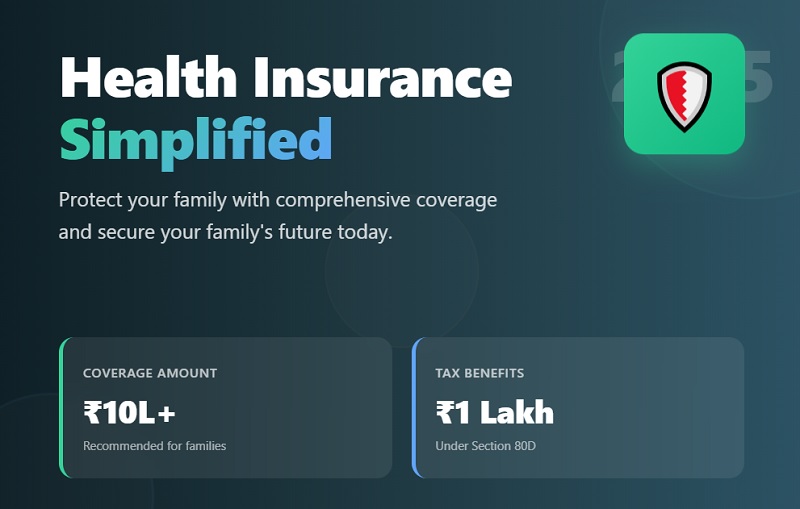
Maximum Total Deduction: ₹1,00,000 per year (₹50,000 for your family + ₹50,000 for senior citizen parents)
Additional Benefit: ₹5,000 deduction for preventive health check-ups (included within above limits)
This means a family paying ₹75,000 in premiums in the 30% tax bracket saves ₹22,500 annually!
The Cashless vs. Reimbursement Claim Process
Cashless Claims (Preferred Method)
1: Inform your insurer about planned hospitalization (emergencies: within 24 hours)
2: Hospital verifies coverage with insurance company
3: Insurer issues pre-authorization approval
4: Receive treatment without paying (except non-covered items)
5: Hospital directly bills the insurance company
6: You pay only for excluded items or amounts beyond coverage
Advantages: No immediate cash outflow, less paperwork, faster process, reduced stress during emergencies
Reimbursement Claims
1: Pay hospital bills from your pocket
2: Collect all original bills, prescriptions, discharge summary, and diagnostic reports
3: Submit claim form with documents to insurer within specified time (typically 15-30 days)
4: Insurer reviews documents and processes claim
5: Approved amount credited to your bank account within 7-30 days
When Used: Non-network hospitals, emergency situations, documentation issues with cashless
Common Mistakes to Avoid When Buying Health Insurance
Hiding Pre-Existing Conditions
Never hide medical history during application. Insurers verify medical records before settling claims. Non-disclosure leads to claim rejection and policy cancellation. Honesty ensures smoother claims despite longer waiting periods.
Buying Inadequate Coverage
₹1-2 lakh coverage was sufficient a decade ago, but today’s medical costs demand ₹5 lakh minimum for individuals, ₹10 lakh for families. Underinsurance means paying from pocket when you need coverage most.
Ignoring Policy Renewal
Letting your policy lapse means losing accumulated no-claim bonus, facing fresh waiting periods, and potentially higher premiums due to increased age. Set automatic reminders and enable auto-renewal.
Not Reading Policy Documents
Skipping policy wordings leads to surprises during claims. Spend 30 minutes understanding your coverage, exclusions, waiting periods, and claim procedures. Knowledge prevents disappointments.
Delaying Purchase Until Older Age
Premiums increase significantly with age and health complications. A 25-year-old pays ₹6,000 annually for coverage that costs a 45-year-old ₹15,000. Buy early, save more, build no-claim bonus.
Choosing Only Based on Premium
Low premium often means limited coverage, higher co-payments, restrictive sub-limits, and complicated claims. Evaluate overall value, insurer reputation, and comprehensive benefits beyond just cost.
Government Health Insurance Schemes
Ayushman Bharat Pradhan Mantri Jan Arogya Yojana (PM-JAY)
World’s largest health insurance scheme providing ₹5 lakh coverage per family annually for secondary and tertiary care hospitalization. Covers 55 crore beneficiaries (bottom 40% population).
Eligibility: Based on Socio-Economic Caste Census (SECC) data, targets vulnerable families
Coverage: 1,949+ treatment packages including surgeries, medical expenses, and daycare procedures
Rashtriya Swasthya Bima Yojana (RSBY)
Provides health insurance to Below Poverty Line (BPL) families with ₹30,000 coverage per family per year. Being merged with PM-JAY in many states.
Employee State Insurance (ESI) Scheme
For organized sector workers earning up to ₹21,000 monthly. Comprehensive medical care for employees and families including hospitalization, maternity benefits, disability coverage.
Making Health Insurance Work for You
Port Your Existing Policy
Unhappy with your current insurer? The Insurance Regulatory and Development Authority of India (IRDAI) allows policy portability. Switch insurers without losing accumulated benefits, no-claim bonus, or serving fresh waiting periods.
Process: Apply to new insurer 45 days before renewal, who coordinates with existing insurer for smooth transfer.
Increase Coverage Through Top-Ups
Instead of buying expensive high-coverage base policies, combine moderate base coverage with super top-up plans. Example: ₹5 lakh base policy + ₹15 lakh super top-up costs less than ₹20 lakh comprehensive coverage.
Utilize Preventive Health Check-ups
Most policies offer free annual health check-ups. Use these to detect health issues early, maintain wellness, and potentially negotiate better renewal terms with documented health improvements.
Maintain Health Records
Keep organized digital and physical copies of all medical documents, prescriptions, diagnostic reports, and hospital bills. Systematic documentation accelerates claim processing and prevents disputes.
The Future of Health Insurance in India
Digital Health Revolution
Telemedicine coverage is now standard in most policies post-COVID. Virtual consultations, AI-based health assessments, and wellness apps integrated with insurance provide 24/7 healthcare access.
Personalized Premium Models
Insurers increasingly reward healthy lifestyles. Walking 10,000 daily steps, maintaining healthy BMI, regular health check-ups, and non-smoking habits earn premium discounts up to 25%.
Parametric Insurance Products
New-age policies with instant claim settlements based on predetermined triggers. Hospitalized for dengue? Receive instant ₹10,000 without documentation. Simplified, faster, customer-friendly.
Comprehensive Wellness Programs
Insurance evolving from illness coverage to wellness partnership. Policies now include mental health coverage, preventive care, fitness coaching, nutrition counseling, and chronic disease management.
Take Action Today
Healthcare emergencies don’t announce their arrival. A comprehensive health insurance policy is the difference between financial security and devastating debt.
Your Next Steps:
- Assess your family’s healthcare needs and budget
- Compare at least 3-5 policies from reputed insurers
- Verify network hospital coverage in your area
- Read policy documents carefully before purchasing
- Buy coverage today, don’t wait for medical emergencies
Remember: The best health insurance policy is the one you buy before you need it. Every day without coverage is a day of financial risk.
Start your health insurance journey today and secure your family’s health and wealth for tomorrow.
Frequently Asked Questions
Q: What is the ideal age to buy health insurance? The earlier, the better. Ideally, purchase in your 20s when premiums are lowest, you qualify for maximum coverage, and can build substantial no-claim bonus over time.
Q: Can I buy health insurance for my parents above 60 years? Yes, several insurers offer senior citizen health insurance plans for individuals up to 65-75 years (varies by insurer). Expect higher premiums and medical screening requirements.
Q: How much health insurance coverage do I need? Minimum ₹5 lakh for individuals, ₹10 lakh for families in metro cities. Consider ₹15-25 lakh if you prefer premium hospitals or have existing health conditions.
Q: Can I claim from two health insurance policies? Yes, you can make claims from multiple policies. However, total claim amount cannot exceed actual medical expenses. Inform both insurers about dual coverage.
Q: What happens if I miss my premium payment? Most policies offer a grace period of 15-30 days. If you don’t pay within this period, your policy lapses. You’ll need to repurchase, losing accumulated benefits and no-claim bonus.
Q: Are pre-existing diseases covered? Yes, but only after a waiting period of 2-4 years (varies by insurer and disease). Some insurers now offer immediate coverage for specific conditions with higher premiums.
Q: Can my health insurance claim be rejected? Claims can be rejected for reasons like non-disclosure of medical history, treatment during waiting period, excluded treatments, incomplete documentation, or fraudulent claims.
Q: Is maternity covered in health insurance? Maternity coverage is available but typically has a waiting period of 9-48 months. Check policy specifics as coverage limits, normal vs. cesarean delivery costs vary significantly.
Q: Do I need separate insurance if my employer provides coverage? Yes, recommended. Employer coverage ends when you change jobs or retire. Personal policy ensures continuity, builds no-claim bonus, and provides coverage during employment gaps.
Q: How are health insurance premiums calculated? Based on age, medical history, chosen coverage amount, city of residence, add-on features, lifestyle habits (smoking), and family medical history.
Disclaimer: Information provided is for educational purposes. Insurance policies, terms, premiums, and regulations change periodically. Consult licensed insurance advisors and read policy documents carefully before purchasing. Actual coverage and benefits depend on specific policy terms and conditions.


One thought on “Health Insurance in India: Complete Guide for everyone”