
Gold and Silver Volatility: A common man dilemma
Understanding Precious Metals Volatility
Gold and silver have long served as cornerstones of investment portfolios, offering protection against inflation and economic uncertainty. However, both metals exhibit distinct volatility patterns that every investor should understand before allocating capital to these precious assets.
What Is Volatility in Precious Metals?
Volatility measures the degree of price fluctuation over time. In the context of gold and silver markets, higher volatility indicates larger price swings, presenting both opportunities and risks for traders and investors. Understanding these fluctuations is essential for developing effective investment strategies.
Gold Volatility: The Stable Hedge
Characteristics of Gold Price Movements
Gold typically demonstrates lower volatility compared to silver, making it a preferred choice for conservative investors seeking stability. The yellow metal’s price movements are influenced by several key factors:
Central Bank Policies: Interest rate decisions and monetary policy shifts directly impact gold prices. When central banks lower rates, gold becomes more attractive as it doesn’t offer yield, making the opportunity cost of holding it lower.
Currency Fluctuations: Gold often moves inversely to the US dollar. A weaker dollar typically supports higher gold prices, as the metal becomes cheaper for holders of other currencies.
Geopolitical Tensions: Global conflicts, trade disputes, and political instability drive investors toward gold as a safe haven asset, reducing volatility during crisis periods while potentially increasing it during uncertain times.
Inflation Expectations: Rising inflation erodes purchasing power, making gold an attractive store of value. Expectations of future inflation can drive significant price movements in gold markets.
Historical Gold Volatility Patterns
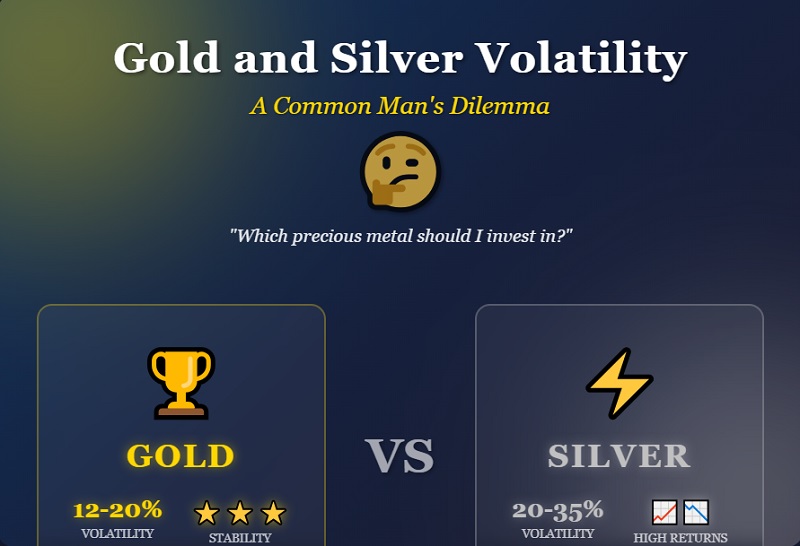
Gold’s annualized volatility typically ranges between 12% and 20%, significantly lower than most equities and commodities. During periods of extreme market stress, such as the 2008 financial crisis or the 2020 pandemic shock, gold volatility can spike temporarily before settling back to historical norms.
The metal’s relatively stable nature makes it suitable for portfolio diversification, often moving independently of stock markets and providing balance during equity downturns.
Silver Volatility: The Industrial Wild Card
Why Silver Is More Volatile Than Gold
Silver exhibits significantly higher volatility than gold, with annualized volatility often ranging between 20% and 35%. Several factors contribute to this increased price instability:
Dual Nature: Silver serves both as a precious metal and an industrial commodity. This dual role subjects it to industrial demand cycles, technology trends, and economic growth patterns, creating additional sources of price volatility.
Smaller Market Size: The silver market is considerably smaller than gold’s market, meaning that large trades or shifts in investment flows can move prices more dramatically.
Supply-Demand Dynamics: Industrial applications consume roughly 50% of annual silver supply, including electronics, solar panels, medical devices, and automotive components. Changes in manufacturing activity directly impact silver demand and prices.
Gold-Silver Ratio Fluctuations: The historical relationship between gold and silver prices creates additional volatility as this ratio expands and contracts based on market conditions.
Industrial Demand Impact
Silver’s extensive use in technology and green energy sectors adds complexity to its price behavior. The growing solar energy industry, electric vehicle production, and 5G infrastructure development all require significant silver, creating demand patterns that differ from traditional precious metals markets.
When economic growth accelerates, industrial demand pushes silver prices higher. Conversely, economic slowdowns can severely impact silver values, creating the heightened volatility characteristic of this metal.
Comparing Gold and Silver Volatility
Key Differences for Investors
The gold-to-silver ratio, measuring how many ounces of silver equal one ounce of gold, historically averages around 60-70 to 1. This ratio itself exhibits volatility, ranging from 30 to 1 during silver bull markets to over 100 to 1 during extreme market stress.
Risk-Return Profile: Silver offers potentially higher returns during bull markets but comes with substantially greater downside risk. Gold provides more stable, modest gains with lower risk of dramatic losses.
Portfolio Role: Gold typically serves as portfolio insurance and long-term wealth preservation. Silver appeals to more aggressive investors seeking higher growth potential or those wanting exposure to industrial and technological trends.
Leverage Effect: Because silver is more volatile, small changes in underlying factors can produce magnified price movements, creating opportunities for traders but also increased risk for buy-and-hold investors.
Factors Driving Precious Metals Volatility
Macroeconomic Influences
Economic data releases significantly impact both metals. Employment reports, GDP figures, manufacturing indices, and consumer confidence data all influence investor sentiment and precious metals demand.
Interest rate expectations remain perhaps the most critical driver. Both gold and silver tend to struggle when real interest rates rise, as they offer no yield and face opportunity cost pressures.
Market Sentiment and Investment Flows
Exchange-traded funds (ETFs) backed by physical gold and silver have transformed precious metals markets. Large inflows or outflows from these products can amplify volatility, particularly in silver’s smaller market.
Speculative positioning by hedge funds and commodity trading advisors also contributes to short-term volatility. When these large players adjust positions rapidly, price swings can intensify.
Supply-Side Factors
Mining production levels, recycling rates, and inventory changes affect both metals. Supply disruptions from major producing regions can trigger price spikes, while production increases may pressure prices downward.
For silver specifically, the fact that approximately 70% of mine production comes as a byproduct of other metals mining means supply responds less directly to price signals, potentially extending volatility cycles.
Managing Volatility in Precious Metals Investments
Strategies for Gold Investors
Dollar-Cost Averaging: Regular, fixed purchases smooth out timing risk and reduce the impact of volatility on your average purchase price.
Long-Term Holding: Gold’s role as a wealth preservation asset makes it well-suited for multi-year holding periods, allowing short-term volatility to become less relevant.
Allocation Sizing: Most financial advisors suggest limiting gold to 5-10% of a diversified portfolio, providing benefits without excessive concentration risk.
Physical vs. Paper: Deciding between physical bullion, ETFs, mining stocks, or futures affects your volatility exposure and should align with your risk tolerance and investment timeline.
Strategies for Silver Investors
Understanding Your Tolerance: Silver requires acceptance of potentially dramatic price swings. Investors uncomfortable with 30-40% drawdowns should limit exposure or avoid silver entirely.
Timing Industrial Cycles: Silver performs best during economic expansions when industrial demand is strong. Understanding economic cycles can help optimize entry points.
Diversification Within Precious Metals: Combining gold and silver exposure can balance stability with growth potential, with weightings adjusted based on risk preferences.
Active Monitoring: Silver’s volatility demands more frequent portfolio review compared to gold’s relatively stable behavior.
Technical Analysis and Volatility Indicators
Using Volatility Measures
Bollinger Bands: These show price channels that expand during high volatility and contract during calm periods, helping identify potential breakout or mean-reversion opportunities.
Average True Range (ATR): This indicator measures absolute volatility, helping traders set appropriate stop-loss levels and position sizes based on current market conditions.
Volatility Index (VIX) Correlation: Precious metals often exhibit relationships with broader market volatility measures, providing context for price movements.
Chart Patterns and Volatility
Gold and silver markets respect many traditional technical patterns. Understanding support and resistance levels, trend channels, and momentum indicators helps navigate volatile price action.
During high volatility periods, technical signals become less reliable as emotions drive trading. Fundamental analysis becomes relatively more important during these times.
The Impact of Market Events on Volatility
Crisis-Driven Volatility
Financial crises, pandemic scares, and geopolitical shocks typically increase precious metals volatility initially before prices stabilize at new levels. The initial reaction often involves indiscriminate selling as investors raise cash, followed by sustained buying as safe-haven demand emerges.
Regulatory and Policy Changes
Government decisions regarding precious metals taxation, import-export restrictions, or monetary policy announcements can trigger sudden volatility spikes. Staying informed about policy discussions helps anticipate these events.
Future Outlook for Gold and Silver Volatility
Emerging Trends
Digital Competition: Cryptocurrencies present themselves as alternative stores of value, potentially affecting precious metals demand and volatility patterns.
Green Energy Transition: Accelerating solar and electric vehicle adoption should support silver industrial demand, potentially altering its volatility characteristics as industrial use becomes even more significant.
Central Bank Digital Currencies: As central banks explore digital currencies, the implications for traditional monetary metals remain uncertain but could influence long-term volatility trends.
Climate Change Impact: Mining operations face increasing environmental scrutiny and climate-related disruptions, potentially affecting supply stability and price volatility.
Investment Vehicles and Their Volatility Profiles
Physical Bullion
Owning physical gold and silver coins or bars provides direct exposure with no counterparty risk. However, premiums over spot prices, storage costs, and liquidation challenges should be considered. Physical ownership is best suited for long-term holders less concerned with short-term volatility.
ETFs and Mutual Funds
Precious metals ETFs offer liquid, low-cost exposure without storage concerns. These track spot prices closely but don’t eliminate volatility. They’re suitable for investors wanting convenient precious metals exposure within brokerage accounts.
Mining Stocks
Gold and silver mining companies offer leveraged exposure to metal prices. A 10% move in gold might produce a 20-30% move in mining stocks. This amplified volatility suits aggressive investors but requires careful company analysis beyond just metal price outlooks.
Futures and Options
Derivatives provide the highest leverage and volatility exposure. These instruments are appropriate only for sophisticated traders with specific strategies and deep understanding of how leverage amplifies both gains and losses.
Practical Tips for Navigating Volatility
For Conservative Investors
Focus primarily on gold with minimal silver allocation. Use physical bullion or established ETFs. Maintain long time horizons and avoid checking prices frequently. Remember that volatility is the price of admission for potential inflation protection and portfolio diversification benefits.
For Aggressive Investors
Consider higher silver allocations or mining stocks for growth potential. Use technical analysis to time entries and exits. Implement position sizing rules to manage risk. Be prepared for significant drawdowns and maintain sufficient cash reserves to avoid forced selling during unfavorable periods.
Universal Principles
Never invest more than you can afford to lose, especially in higher-volatility silver. Rebalance periodically to maintain desired allocations. Stay informed about macroeconomic trends but avoid overreacting to short-term news. Consider your precious metals holdings as insurance rather than growth drivers within your overall portfolio strategy.
Conclusion: Embracing Volatility as Opportunity
Gold and silver volatility represents both challenge and opportunity. Understanding the distinct characteristics of each metal allows investors to make informed decisions aligned with their risk tolerance, investment timeline, and financial goals.
Gold’s relative stability makes it the foundation of precious metals exposure for most investors, providing reliable diversification and wealth preservation. Silver’s heightened volatility offers growth potential for those willing to accept increased risk and more dramatic price swings.
Successful precious metals investing requires accepting volatility as inherent to these markets while implementing strategies to manage its impact. Whether you choose gold’s steady influence, silver’s dynamic potential, or a combination of both, understanding volatility patterns is essential for navigating these timeless assets in modern portfolios.
By maintaining discipline, diversifying appropriately, and focusing on long-term objectives rather than short-term fluctuations, investors can harness precious metals’ unique benefits while managing the volatility that makes these markets both challenging and rewarding.
Disclaimer: This article is for informational purposes only and does not constitute financial advice. Precious metals investing involves risk, including potential loss of principal. Consult with qualified financial advisors before making investment decisions.




One thought on “Gold and Silver Volatility: A common man dilemma”