
Financial Independence, Retire Early (FIRE) – How it works
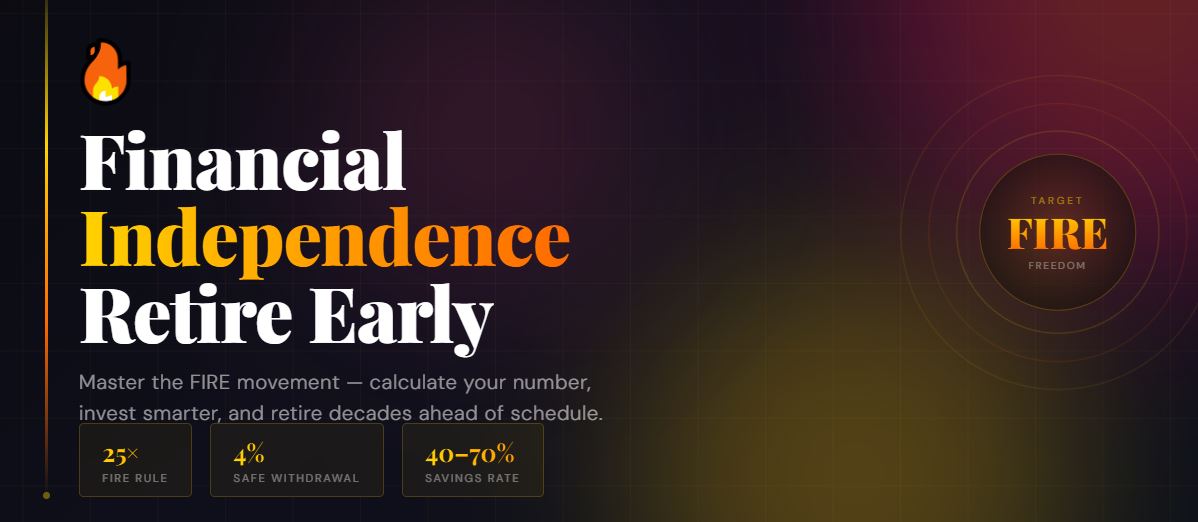
The idea of retiring in your 30s or 40s — once considered a pipe dream — is now a structured, data-driven movement backed by a global community of disciplined savers and investors. Welcome to FIRE: Financial Independence, Retire Early. Here’s everything you need to know to determine if this path is right for you.
What Is the FIRE Movement?
The FIRE movement is a financial philosophy centered on two core goals: achieving financial independence (having enough assets to cover all living expenses without working) and retiring early — often decades before the traditional retirement age of 65.
At its heart, FIRE is not just about quitting your job. It’s about having the freedom to choose how you spend your time — whether that means traveling the world, starting a passion project, volunteering, or simply living on your own terms.
The Different Types of FIRE
FIRE is not a one-size-fits-all approach. Depending on your lifestyle goals and financial situation, one of these variations may suit you better:
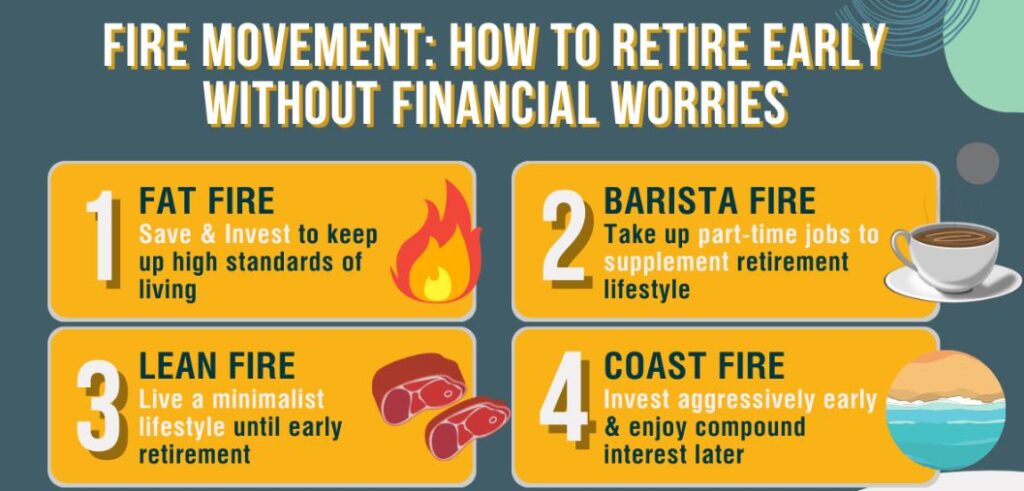
Lean FIRE is designed for those comfortable with a minimalist lifestyle. Practitioners aim to retire on a very modest annual budget — typically under $40,000 per year — requiring a smaller nest egg but demanding strict, long-term frugality.
Fat FIRE is the opposite end of the spectrum. Fat FIRE allows for a more comfortable, even luxurious retirement lifestyle, with annual expenses often exceeding $100,000. This requires significantly more savings but offers greater freedom and fewer lifestyle sacrifices.
Coast FIRE takes a middle-ground approach. With Coast FIRE, you save aggressively early in life until your investments are large enough to grow to your retirement goal on their own — without any further contributions. At that point, you only need to earn enough to cover your current living expenses, removing the pressure of aggressive saving indefinitely.
Barista FIRE is for those who want to semi-retire — leaving their high-stress career to work part-time or in a lower-pressure job, supplementing investment income while still enjoying the social and health benefits of working.
How to Calculate Your FIRE Number
Your FIRE number is the total amount of savings and investments you need to retire. It is calculated using the 25x Rule, derived from the widely cited 4% Safe Withdrawal Rate — a guideline suggesting that withdrawing 4% of your portfolio annually allows it to sustain itself indefinitely over a 30-year retirement horizon.
The Formula:
FIRE Number = Annual Expenses × 25
For example:
- If you spend $50,000 per year, your FIRE number is $1,250,000
- If you spend $40,000 per year, your FIRE number is $1,000,000
- If you spend $80,000 per year, your FIRE number is $2,000,000
The lower your annual expenses, the smaller your FIRE number — and the faster you can reach it. This is why intentional spending is one of the most powerful levers in the FIRE strategy.
Note: The 4% rule is a guideline, not a guarantee. For early retirees with a 40–50 year retirement horizon, some financial planners recommend a more conservative 3–3.5% withdrawal rate to account for market variability and longevity.
Saving & Investment Strategies for FIRE
Reaching financial independence requires more than just cutting expenses — it demands a structured, consistent investment strategy.
Maximize Tax-Advantaged Accounts First
Before investing in taxable accounts, maximize contributions to:
- 401(k) or 403(b): Contribute at least enough to capture your full employer match — this is essentially free money.
- Roth IRA or Traditional IRA: Contribute the annual maximum ($7,000 in 2025) to benefit from tax-free or tax-deferred growth.
- HSA (Health Savings Account): Often called the “triple tax advantage” account — contributions, growth, and qualified withdrawals are all tax-free.
Invest in Low-Cost Index Funds
The FIRE community strongly favors passive investing through broad market index funds. Funds that track the S&P 500 or total stock market (such as those offered by Vanguard, Fidelity, or Schwab) provide diversification, low fees, and historically strong long-term returns averaging around 7–10% annually after inflation.
Increase Your Savings Rate Aggressively
The single most powerful driver of early retirement is your savings rate — the percentage of your income you save and invest. While the average American saves around 5–8% of income, FIRE practitioners typically aim for 40–70% or more. Even small increases in your savings rate can dramatically reduce your time to retirement.
Build Multiple Income Streams
Relying on a single paycheck is a vulnerability. Many FIRE pursuers develop side income through freelancing, rental income, dividend investing, or digital products — accelerating their path to independence while reducing financial risk.
Real-Life FIRE Tips for Millennials & Gen Z
Start as early as possible. The math of compound interest is ruthlessly in favor of those who begin early. Even investing $300/month starting at age 22 versus age 32 can result in hundreds of thousands of dollars more at retirement — with no additional effort.
Track every dollar. You cannot optimize what you don’t measure. Use budgeting tools like YNAB, Mint, or a simple spreadsheet to understand exactly where your money goes each month. Awareness is the first step to change.
Avoid lifestyle inflation. As your income grows, resist the temptation to proportionally increase your spending. Every raise that goes into investments rather than a bigger apartment accelerates your FIRE timeline significantly.
Challenge the “I can’t afford it” mindset. Many Gen Z and Millennials carry student debt, face high housing costs, and deal with economic pressures that prior generations did not. FIRE doesn’t require a six-figure salary — it requires intentionality. Small, consistent actions compound over time.
Build community. FIRE is a long game. Surrounding yourself with like-minded individuals — through forums like Reddit’s r/financialindependence, local meetups, or online communities — provides accountability, motivation, and practical wisdom from those further along the path.
Revisit your FIRE number regularly. Life changes — so should your plan. Reassess your target annually to reflect changes in income, expenses, family situation, or investment performance.
Is FIRE Right for You?
FIRE is not for everyone, and that’s perfectly fine. The movement demands discipline, intentional trade-offs, and a long-term mindset. But even if full early retirement isn’t your goal, the principles of FIRE — spending less than you earn, investing consistently, and building financial resilience — are universally valuable.
The real power of FIRE isn’t just the ability to stop working. It’s the ability to work on your own terms — with confidence, freedom, and security. For a generation redefining what success looks like, that may be the most valuable retirement benefit of all.




One thought on “Financial Independence, Retire Early (FIRE) – How it works”