CIBIL Score in India: Complete Guide to Understanding and Improving Your Credit Score
Your CIBIL score can be the difference between getting your dream home loan approved and facing rejection. If you’re planning to apply for any form of credit in India, understanding your CIBIL score isn’t optional—it’s essential.
In this comprehensive guide, we’ll break down everything you need to know about CIBIL scores, from the basics to actionable strategies for improvement.
What is a CIBIL Score?
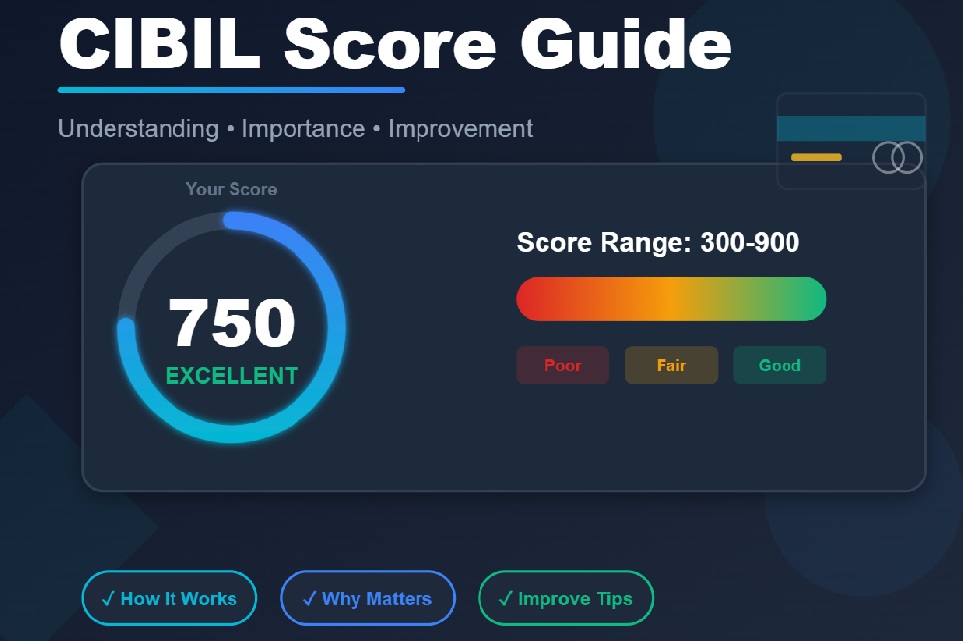
A CIBIL score is a three-digit number ranging from 300 to 900 that represents your creditworthiness. Generated by TransUnion CIBIL (Credit Information Bureau India Limited), this score is calculated based on your credit history and repayment behavior.
Think of it as your financial report card. Just as grades reflect your academic performance, your CIBIL score reflects how responsibly you’ve managed credit in the past.
CIBIL Score Ranges and What They Mean
- 300-549: Poor – Loan approval is highly unlikely
- 550-649: Average – Limited loan options with high interest rates
- 650-749: Good – Decent chances of approval with moderate interest rates
- 750-900: Excellent – Best loan offers with lowest interest rates
Most lenders consider a score of 750 or above as ideal for loan approvals.
How Does CIBIL Score Work?
Your CIBIL score is calculated using complex algorithms that analyze your credit behavior. TransUnion CIBIL collects data from banks and financial institutions to create your Credit Information Report (CIR).
The Five Key Factors That Determine Your CIBIL Score
1. Payment History (35% weightage)
Your repayment track record is the most significant factor. Every missed EMI, late payment, or default negatively impacts your score. Consistent on-time payments, on the other hand, steadily improve it.
2. Credit Utilization Ratio (30% weightage)
This refers to how much of your available credit limit you’re using. If you have a credit card with a ₹1 lakh limit and regularly use ₹80,000, your utilization ratio is 80%—which is too high. Experts recommend keeping this below 30%.
3. Credit History Length (15% weightage)
The longer your credit history, the better. A decade-old credit card in good standing carries more weight than a newly opened account. This is why closing your oldest credit card can actually hurt your score.
4. Credit Mix (10% weightage)
Having a healthy mix of secured loans (home loans, car loans) and unsecured credit (credit cards, personal loans) demonstrates your ability to manage different types of credit responsibly.
5. New Credit Inquiries (10% weightage)
Every time you apply for credit, lenders make a “hard inquiry” on your CIBIL report. Multiple inquiries in a short period signal credit hunger and can lower your score.
Why is Your CIBIL Score Important?
1. Loan Approval Decision
Your CIBIL score is the first thing lenders check. A score below 650 often leads to immediate rejection, regardless of your income or assets.
2. Interest Rates You’ll Pay
The difference between a 750 score and an 800 score could mean lakhs of rupees in interest savings over a 20-year home loan. Banks offer their best rates to borrowers with excellent scores.
3. Credit Card Approvals
Premium credit cards with attractive rewards are reserved for individuals with high CIBIL scores. A poor score limits you to basic cards or secured credit cards.
4. Loan Amount Sanctioned
Even if approved, a lower CIBIL score might result in a reduced loan amount—potentially forcing you to compromise on your home or car choice.
5. Faster Processing
Applications with excellent CIBIL scores move through approval processes much faster, sometimes with instant approvals for pre-qualified offers.
6. Better Negotiating Power
A strong credit score gives you leverage to negotiate better terms, lower processing fees, and additional benefits with lenders.
How to Improve Your CIBIL Score: 11 Proven Strategies
Improving your CIBIL score isn’t an overnight process, but with consistent effort, you can see significant improvements within 6-12 months.
1. Pay All Bills on Time, Every Time
Set up automatic payments or reminders for all credit card bills and loan EMIs. Even a single 30-day late payment can drop your score by 50-100 points.
2. Reduce Your Credit Utilization Below 30%
If you’re using too much of your credit limit, either pay down balances or request a credit limit increase. Never max out your credit cards.
3. Don’t Close Old Credit Cards
Keep your oldest credit accounts active, even if you rarely use them. They contribute positively to your credit history length. Make a small purchase every few months to keep them active.
4. Check Your CIBIL Report for Errors
Mistakes happen. You’re entitled to one free CIBIL report annually. Review it carefully and dispute any errors—wrong account information, payments marked late that were on time, or accounts that aren’t yours.
5. Limit Hard Inquiries
Space out loan applications by at least six months. When rate shopping for loans, do so within a 14-30 day window, as multiple inquiries for the same purpose are typically counted as one.
6. Settle Outstanding Dues
If you have any settled or written-off accounts, they severely damage your score. Try to pay these in full rather than settling for less than the owed amount.
7. Maintain a Healthy Credit Mix
If you only have credit cards, consider adding a small personal loan or secured credit. If you only have loans, responsibly using a credit card can help diversify your credit mix.
8. Become an Authorized User
If you have family members with excellent credit history, ask to be added as an authorized user on their credit card. Their positive payment history can benefit your score.
9. Avoid Multiple Loan Applications
Each rejection stays on your report. Apply for credit only when you have a reasonable chance of approval based on the lender’s criteria.
10. Clear Dues Before Closing Accounts
Never close a credit card or loan account with outstanding dues. Clear all balances first, then wait a few months before closure if necessary.
11. Keep Credit Card Balances Low Even If You Pay in Full
Credit utilization is often reported based on your statement balance, not your payment. Keep balances low throughout the month, not just on the payment due date.
Common CIBIL Score Myths Debunked
Myth 1: Checking your own CIBIL score lowers it. Truth: Self-inquiries are “soft inquiries” and don’t affect your score.
Myth 2: You need to carry a credit card balance to build credit. Truth: Paying in full each month is ideal. You don’t need to pay interest to build credit.
Myth 3: Closing credit cards improves your score. Truth: This often hurts your score by reducing available credit and shortening credit history.
Myth 4: Income affects your CIBIL score. Truth: Your score is based purely on credit behavior, not income level.
Myth 5: Once damaged, your CIBIL score can never recover. Truth: With consistent positive behavior, even severely damaged scores can recover over time.
How Long Does It Take to Improve Your CIBIL Score?
The timeline varies based on your starting point:
- Minor improvements (10-50 points): 1-3 months of positive behavior
- Moderate improvements (50-100 points): 6-12 months
- Major recovery (100+ points): 12-24 months or longer
Negative items like late payments remain on your report for 3 years, while settled/written-off accounts stay for 7 years. However, their impact diminishes over time if you maintain positive credit behavior.
How to Check Your CIBIL Score
You can check your CIBIL score through:
- Official CIBIL website: One free report per year, paid plans for more frequent access
- Bank portals: Many banks offer free CIBIL score checks to customers
- Third-party websites: Several fintech apps provide free score monitoring
- Credit card statements: Some issuers include your score in monthly statements
The Bottom Line
Your CIBIL score is one of the most important financial metrics you’ll manage in your lifetime. It affects your ability to borrow, the cost of borrowing, and even some employment opportunities in the financial sector.
The good news? You have complete control over it. Every on-time payment, every responsible credit decision, and every strategic move to reduce utilization contributes to a better score.
Start today by checking your CIBIL report, identifying areas for improvement, and committing to better credit habits. Your future self—applying for that home loan or car loan—will thank you.
Ready to take control of your credit score? Check your CIBIL score today and start implementing these strategies for a stronger financial future.
Frequently Asked Questions (FAQs)
Q: What is a good CIBIL score for a home loan? A: A score of 750 or above is considered excellent for home loan approval with favorable interest rates.
Q: How often is my CIBIL score updated? A: Banks and financial institutions report to CIBIL monthly, so your score typically updates every 30-45 days.
Q: Can I get a loan with a 650 CIBIL score? A: Yes, but options will be limited and interest rates will be higher. Some lenders specialize in loans for lower credit scores.
Q: Does paying off a loan improve CIBIL score immediately? A: The positive impact appears once the lender reports the closure to CIBIL, usually within 30-45 days.
Q: Will a personal loan hurt my CIBIL score? A: Taking a personal loan creates a hard inquiry (minor temporary drop), but paying it responsibly improves your score over time.
Q: Can I remove negative marks from my CIBIL report? A: Only if they’re errors. Legitimate negative information remains for 3-7 years depending on the type, but its impact decreases over time.