
Build Your Emergency Fund Now
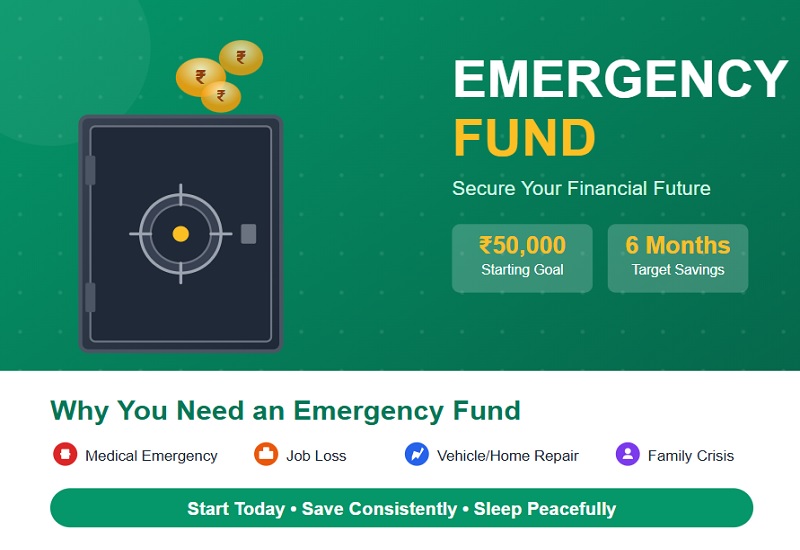
Let me explain emergency funds in a way that connects with our Indian reality – where family obligations are strong, job security isn’t guaranteed, and medical emergencies can drain savings overnight.
What Is an Emergency Fund?
An emergency fund is money you keep aside specifically for life’s unexpected problems. Think of it as your financial insurance – just like we insure our bikes and cars, this is insurance for your daily life.
It’s not for Diwali shopping, upgrading your phone, or that Goa trip. It’s for real emergencies: job loss, hospital bills, two-wheeler accidents, house repairs during monsoon, or urgent family needs.
Why Indians Desperately Need Emergency Funds
Our parents’ generation relied on gold, chit funds, and borrowing from relatives. Today’s reality is different:
Picture this: You’re earning ₹45,000 per month in Bangalore. Suddenly, your father has a heart attack in your hometown. The hospital demands ₹2 lakh upfront. Without an emergency fund, you’re forced to:
- Sell your mother’s gold at below-market rates (emotional and financial loss)
- Take a personal loan at 14-18% interest
- Borrow from relatives (straining relationships)
- Withdraw from PPF (penalties and lost tax benefits)
- Use credit card (24-36% interest – financial disaster)
With an emergency fund? You pay the hospital bills immediately, focus on your father’s recovery, and repay yourself slowly without interest or guilt.
How Much Should You Save?
Starter Goal: ₹50,000-₹1,00,000 This covers most minor emergencies – bike repairs, medical tests, sudden travel to hometown, phone replacement, or helping family members.
Standard Goal: 6-12 Months of Expenses For Indian families, 6 months is minimum. Unlike Western countries, we don’t have strong unemployment benefits or universal healthcare.
Calculate your monthly essentials: rent (if applicable), groceries, utilities, EMIs, insurance premiums, children’s school fees, domestic help, commute costs, parents’ medical expenses.
Example: If your monthly expenses are ₹40,000, aim for ₹2,40,000 to ₹4,80,000.
Why Indians Need More:
- Limited social security
- Family responsibilities (aging parents, siblings’ education/marriage)
- Medical emergencies cost more out-of-pocket
- Job hunting takes longer (4-6 months average)
- Contractual/gig work is increasing
Real-Life Example: Rahul’s Emergency Fund Journey
Rahul, 32, works as a software engineer in Pune earning ₹75,000 monthly (in-hand). His monthly expenses including rent, EMI, parents’ support, and household costs: ₹45,000.
Month 1-3: He started by cutting back on Swiggy orders and OTT subscriptions he barely used. Saved ₹5,000 monthly. Emergency fund: ₹15,000.
Month 4: Diwali bonus arrived – ₹40,000. Instead of upgrading his phone, he deposited ₹30,000 in emergency fund (kept ₹10,000 for festival expenses). Total: ₹45,000.
Month 5-10: Automated ₹8,000 monthly transfer after salary credit. By month 10, he had ₹93,000.
Month 11: His mother needed cataract surgery. Cost: ₹65,000 (insurance covered only ₹25,000). He paid ₹40,000 from emergency fund without taking loans. Remaining: ₹53,000.
Month 12-24: He rebuilt aggressively, saving ₹10,000 monthly plus his yearly bonus. Added tax refund of ₹18,000. After 2 years, he reached ₹3,00,000 – nearly 7 months of expenses.
The payoff: In year 3, his company laid off 30% staff due to client losses. Rahul had 7 months to find a new job. He didn’t panic-accept a lower salary. He negotiated well and got a 20% raise at a better company.
Step-by-Step: Building Your Emergency Fund (Indian Way)
Step 1: Calculate Your Real Expenses Write down every rupee:
- Rent/EMI
- Groceries and household items
- Utilities (electricity, water, gas, internet, mobile)
- Domestic help
- Children’s school fees/tuition
- Parents’ support/medical expenses
- Vehicle maintenance and fuel
- Existing EMIs
- Insurance premiums
- Miscellaneous (parlor, medicines, etc.)
Multiply this by 6-12 months.
Step 2: Start Small, Start Today Even ₹1,000 per month matters. Don’t wait for the “right time” or higher salary.
Step 3: Open a Separate Savings Account Best options in India:
- High-interest savings accounts: Banks like IDFC First, RBL, AU Small Finance offer 6-7% interest
- Sweep-in FD facility: Your savings automatically converts to FD, but you can withdraw anytime
- Liquid mutual funds: Slightly higher returns (7-8%), money available in 24 hours
Avoid regular savings accounts earning just 3-4%.
Step 4: Automate Monthly Transfers Set up auto-transfer on salary day. Use net banking or UPI autopay.
Step 5: Boost Your Fund With:
- Diwali/festival bonuses
- Income tax refunds
- Salary increments (save at least 50% of the raise)
- Side income (freelancing, tuitions, rent from property)
- Wedding gift money
- Annual performance bonuses
- Selling old gold jewelry that nobody wears
Step 6: Keep It Liquid, But Separate You need access within 24-48 hours. Don’t lock it in:
- Long-term FDs (penalties hurt)
- ELSS mutual funds (3-year lock-in)
- Real estate
- PPF (limited withdrawal rules)
Where to Keep Your Emergency Fund (Indian Options)
Tier 1 (Immediate Access – Keep 2 months’ expenses here):
- High-interest savings account
- Sweep-in FD account
Tier 2 (24-48 hour access – Keep 4-6 months’ expenses here):
- Liquid mutual funds (Debt category)
- Overnight funds
- Short-term FDs with premature withdrawal facility
Example Allocation for ₹3,00,000 emergency fund:
- ₹90,000 in high-interest savings account
- ₹2,10,000 in liquid mutual funds
Common Indian Mistakes to Avoid
Mistake 1: “My FD is my emergency fund” FDs have penalties on premature withdrawal. Plus, breaking FDs becomes mentally difficult.
Mistake 2: “I’ll borrow from my brother/friend if needed” This strains relationships. What if they also face emergencies? Money and relationships don’t mix well.
Mistake 3: “Gold is my emergency fund” Selling gold is emotional (especially mothers’ jewelry). You get less than market value. Gold prices fluctuate.
Mistake 4: “I’ll use credit card and pay later” Credit card interest is 36-42% annually. One emergency can trap you in debt spiral for years.
Mistake 5: Using emergency fund for “investment opportunities” “My friend’s cousin is starting a business and guaranteeing 24% returns…” No. Just no.
Mistake 6: Keeping everything in savings account Inflation is 6-7%. Your money loses value. Split between savings and liquid funds.
What Counts as an Emergency?
Yes, This Is an Emergency:
- Sudden job loss or salary delays
- Medical emergencies (yours or family members)
- Accident or vehicle repairs
- House repairs (roof leakage, plumbing burst)
- Urgent travel to hometown for family crisis
- Laptop/phone breakdown (if essential for work)
- Unexpected legal expenses
- Natural disasters (floods, earthquakes affecting your home)
- Helping parents with urgent medical needs
No, This Is NOT an Emergency:
- Cousin’s wedding shopping
- “Only today” sale on Amazon/Flipkart
- New phone launch (your current phone works fine)
- Friends’ Goa trip plan
- Diwali/festival shopping
- Upgrading TV/fridge when current one works
- “Investment opportunity” from relatives
- Down payment for bigger car/house
Indian Family Context: Setting Boundaries
The Guilt Factor: In Indian families, saying “no” to money requests feels cruel. Your emergency fund will attract requests:
- “Beta, your cousin needs ₹50,000 for CA coaching”
- “Your sister’s wedding needs ₹2 lakhs more for jewelry”
- “Invest in your uncle’s business venture”
Solution: Be honest but firm. “I have this money set aside only for life-threatening emergencies. For other needs, let’s explore loans or planning together.” Help them find solutions without breaking your safety net.
Compromise: Keep a separate “family support fund” if you regularly help parents/siblings. Don’t mix it with emergency fund.
Tax Implications
Emergency fund savings (in savings account or liquid funds) are separate from tax-saving investments:
- Interest earned is taxable
- No 80C benefits (that’s for ELSS, PPF, insurance)
- Don’t lock emergency money in tax-saving investments
First build emergency fund, then focus on tax-saving investments.
The Indian Middle-Class Reality Check
Scenario 1: Medical Emergency Average ICU cost in metro cities: ₹15,000-₹25,000 per day Even with health insurance, you pay:
- Room rent above limit
- Non-medical expenses (attendant food, medicines from outside)
- Pre and post-hospitalization costs Your ₹5 lakh insurance might cover only ₹3 lakhs. You need ₹2 lakhs ready.
Scenario 2: Job Loss Unlike US/Europe, India has no unemployment benefits. You depend entirely on your savings. Average job search time: 3-6 months. Your emergency fund is your salary during this period.
Scenario 3: Family Obligations Your father needs knee replacement: ₹3 lakhs Your sister’s wedding: Expected contribution ₹2 lakhs Your child’s school admission: ₹50,000 These aren’t emergencies, but in Indian families, they feel like emergencies. Keep emergency fund separate.
The Peace of Mind Factor (Indian Style)
Remember that constant worry:
- “What if my company shuts down like so many startups?”
- “What if papa needs surgery?”
- “What if my scooter breaks down and I can’t reach office?”
- “What if landlord suddenly asks me to vacate?”
Emergency fund doesn’t just save money. It saves your mental health. You sleep better. You don’t fear the unknown. You make career decisions from confidence, not desperation.
In India, where most people live paycheck to paycheck, having 6 months of expenses saved makes you financially stronger than 80% of the population.
Start Today: Action Plan
Today:
- Open a high-interest savings account (online applications take 10 minutes)
- Transfer whatever you can – ₹500, ₹1,000, ₹5,000
This Week:
- Calculate your actual monthly expenses
- Set emergency fund target (6-12 months)
- Set up auto-transfer from salary account
This Month:
- Cut one unnecessary expense (unused subscriptions, excessive food delivery)
- Channel that money to emergency fund
- Open liquid fund investment (start with ₹5,000)
This Year:
- Reach at least ₹1 lakh milestone
- Put all bonuses, increments toward the fund
- Review and adjust target as life changes
Remember
Our grandparents had joint families as safety nets. Our parents had stable government jobs. We have neither. We have uncertainty, nuclear families, aging parents depending on us, and expensive cities.
Your emergency fund is your safety net.
Don’t wait for crisis to realize its importance. Every successful person you admire has one. Every financially stable family has one.
Start small, stay consistent, protect it fiercely.
Your future self will thank you when the emergency comes – and trust me, it always comes.
“The best time to build an emergency fund was 5 years ago. The second-best time is today.”





One thought on “Build Your Emergency Fund Now”